Follow the duck.
A duck race is seven simple steps. We ship everything and coach you the whole way. Your team brings the fun.
- Freight both ways
- Coaching all season
- 37 years of race experience
Your team
- Picks the spot
- Hosts a tagging party
- Runs race day with 8 to 15 volunteers
We bring
- Numbered ducks, tags, and the finish trap
- Shipping there and back
- Your race website and winner lookup
Pick your water
Almost any water works. So does no water at all.
- Visit your spot in the same season you'll race.
- Check with your parks department and city early. We'll walk you through it.
See the details
Permits
- Most races need a yes from whoever owns the land, a city special-event permit, and whoever controls the water.
- Ask your state's charitable-gaming office early. Some states need a license for duck races.
- Carry a special-event liability policy for the day, with Derby Duck Races named as an additional insured.
Racing a big river?
- If boats or barges use it, the Coast Guard asks for a marine event application at least 135 days before the race.
- Below a dam, ask what water releases look like for your date.
Water parks
- Tell us early. We keep a separate supply of pool-ready ducks.
The ducks arrive
Your flock shows up on pallets with the tags and the finish trap. Shipping is on us, both ways.
- No loading dock? Tell us, and the truck brings a liftgate.
- Keep everything in one spot, with one person in charge.
- Save the pallets. The ducks ride home on them.
See the details
- Each pallet holds 16 crates of about 160 ducks, roughly 600 pounds.
- We send a few extra ducks, just in case.
- Give us a wide delivery window and a backup contact.
- Open a few crates when they land, and photograph any damage.
Throw a tagging party
Every duck gets a numbered tag. Add pizza and music, and it's one of the best volunteer nights of the year.
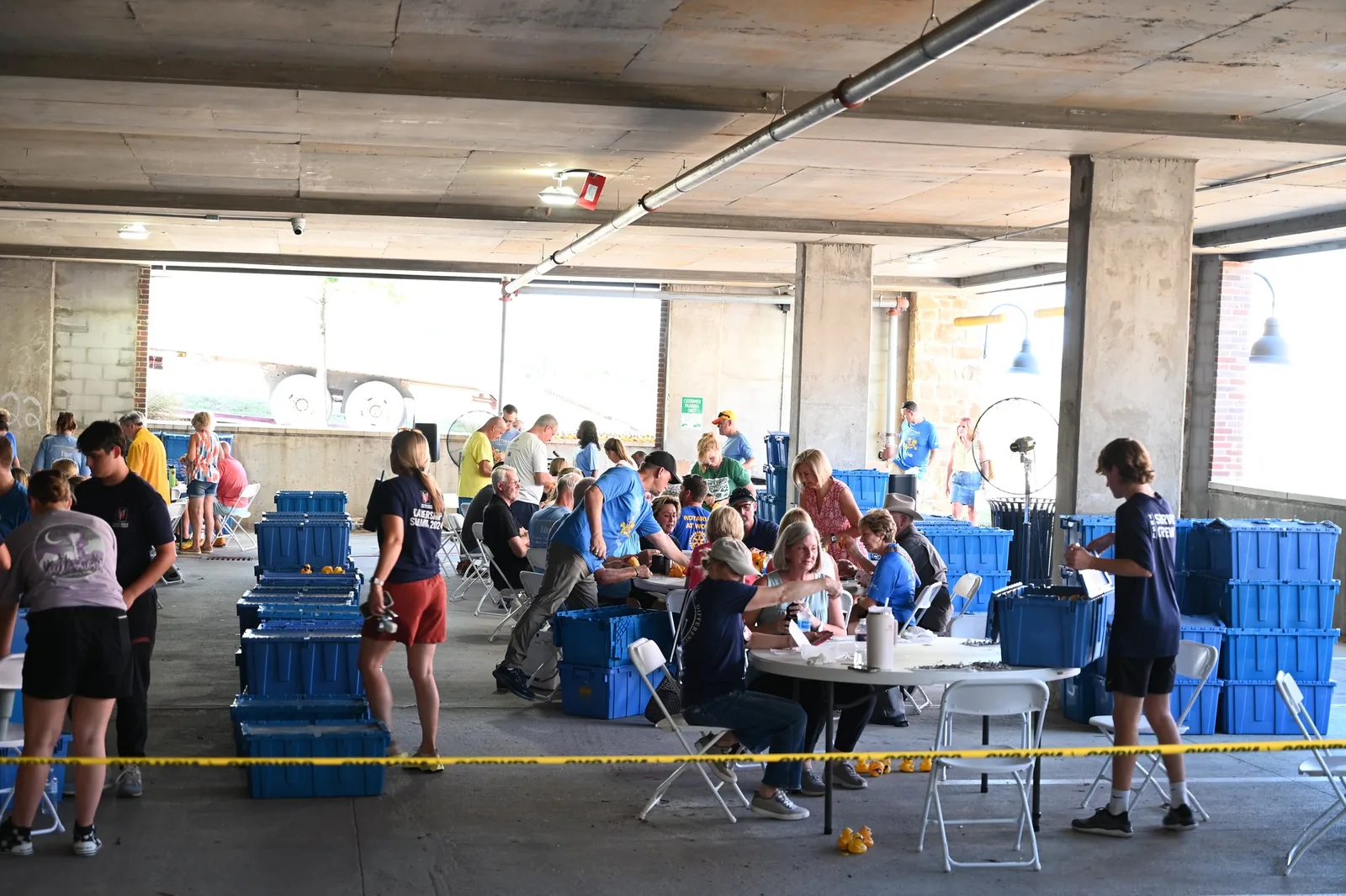
- Two tables: old tags off at one, new tags on at the other.
- One person hands out the tags, in order.
- Keep tagged and untagged ducks in separate crates.
See the details
- Bring plastic knives or wooden cuticle pushers, scissors, towels, and snacks.
- Tags come 1,000 to a roll. Cut each roll into sheets of 100, and snap a photo of every roll's label.
- Ducks only need to be dry and free of mud. No scrubbing.
- Set aside any duck that's punctured or missing its weight, and send us your count within a day.
Set up the course
A floating line guides the flock into the finish trap, one duck at a time.
- Use floating boom, rope, or pool noodles to make the lane.
- Clip the ends to the trap so no duck sneaks around it.
- Float a few test ducks once your shipment arrives.
See the details
- Booms are yours to find. A marina, a swim club, or your city can often lend one.
- Slow water? Push the flock with a fire hose, or have two boats tow the line toward the finish.
- Check your phone signal at the finish line. You'll look up winners there.
The drop
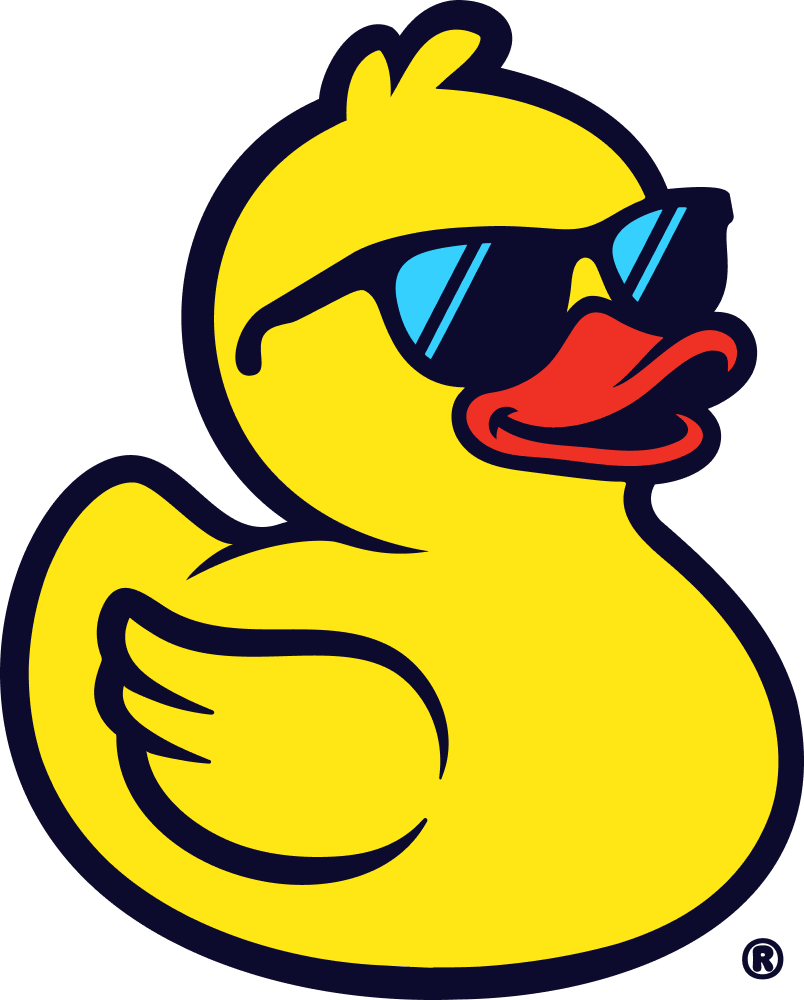
The big moment. Most races tip the ducks from a truck or a bridge.
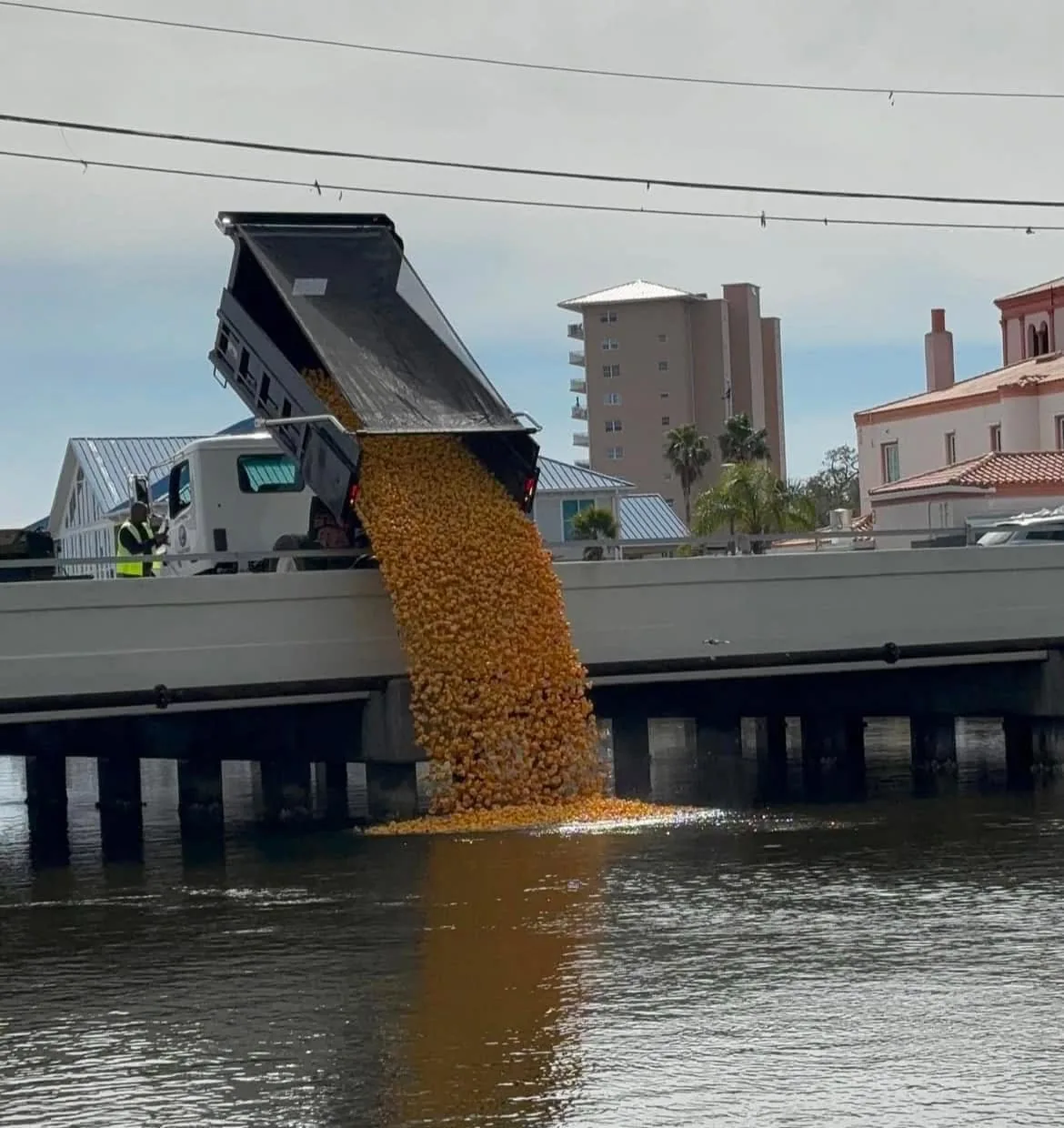
- Line up a truck, loader, or crane early. Fire departments and local businesses love to help.
- Give the crowd a clear view of the drop.
“Launching 40,000 ducks in the water is quite a visual. Otherwise, it's just a raffle.”
More ways races have done it
- Crane and dumpster: Louisville, KY
- Bucket off a bridge: Gadsden, AL
- Truck at a seawall: Fort Lauderdale, FL
- Bins off a footbridge: Pittsburgh, PA
- From a boat: Silverdale, WA
- Water-park slide: Conroe, TX
The finish
The trap lets ducks in single file, so the finish order sorts itself out. No judges needed.
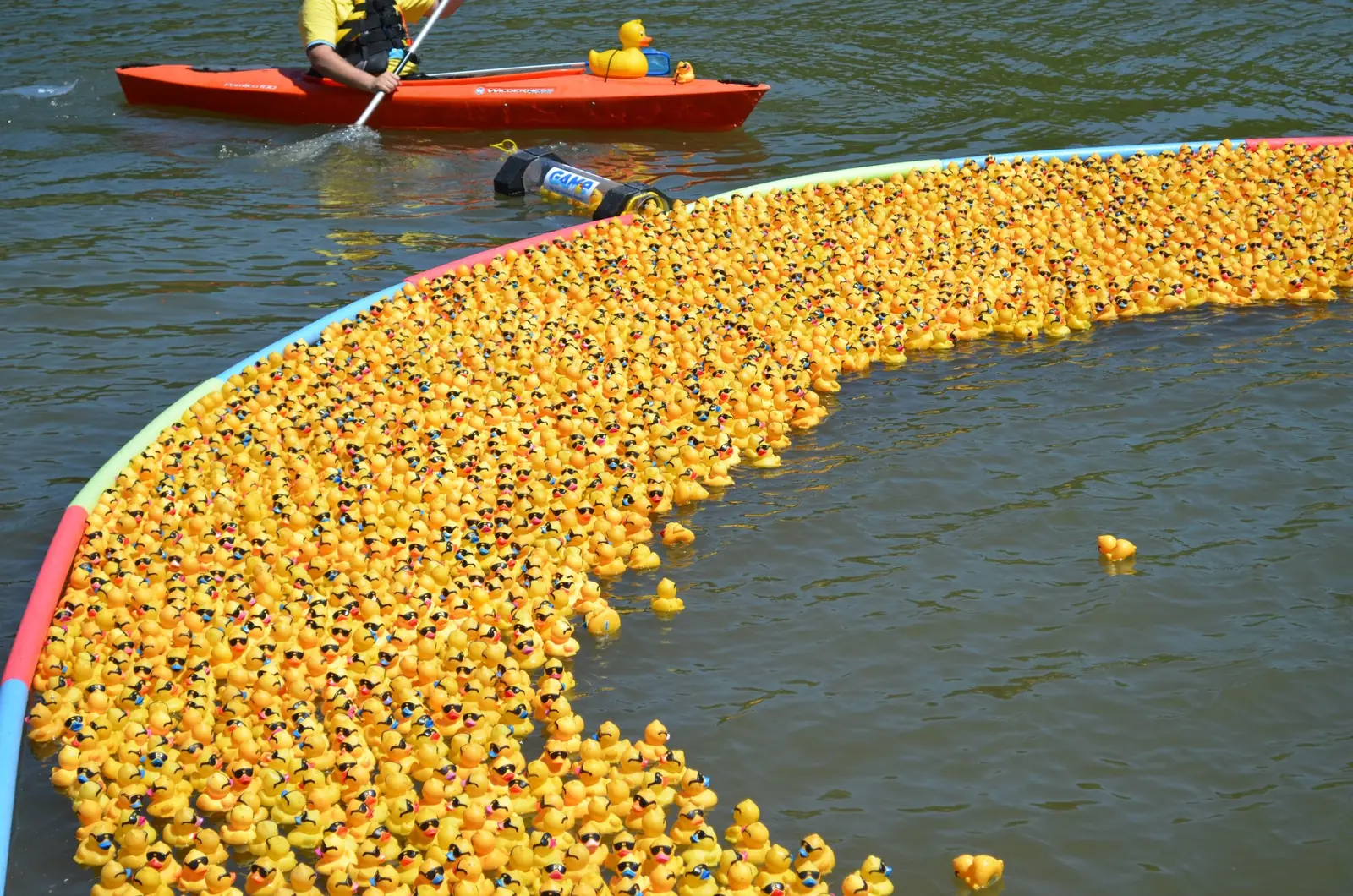
- Two people at the trap pull the first ducks out, in order.
- Look up each number on your phone to see who won.
- Music and an emcee keep the crowd cheering.
See the details
- Pull 5 to 10 more ducks than you have prizes. Some numbers won't belong to anyone.
- Put every tagged duck in the water, sold or not.
- Download your winners list the night before, in case the signal drops.
- Rain? Ducks race in it. For storms, your rules can let you draw winners at random instead.
- Have your top sponsor present the winning duck, and go live on Facebook.
Home again
Scoop up the flock, rinse it, and pack it the way it came. We send the truck.
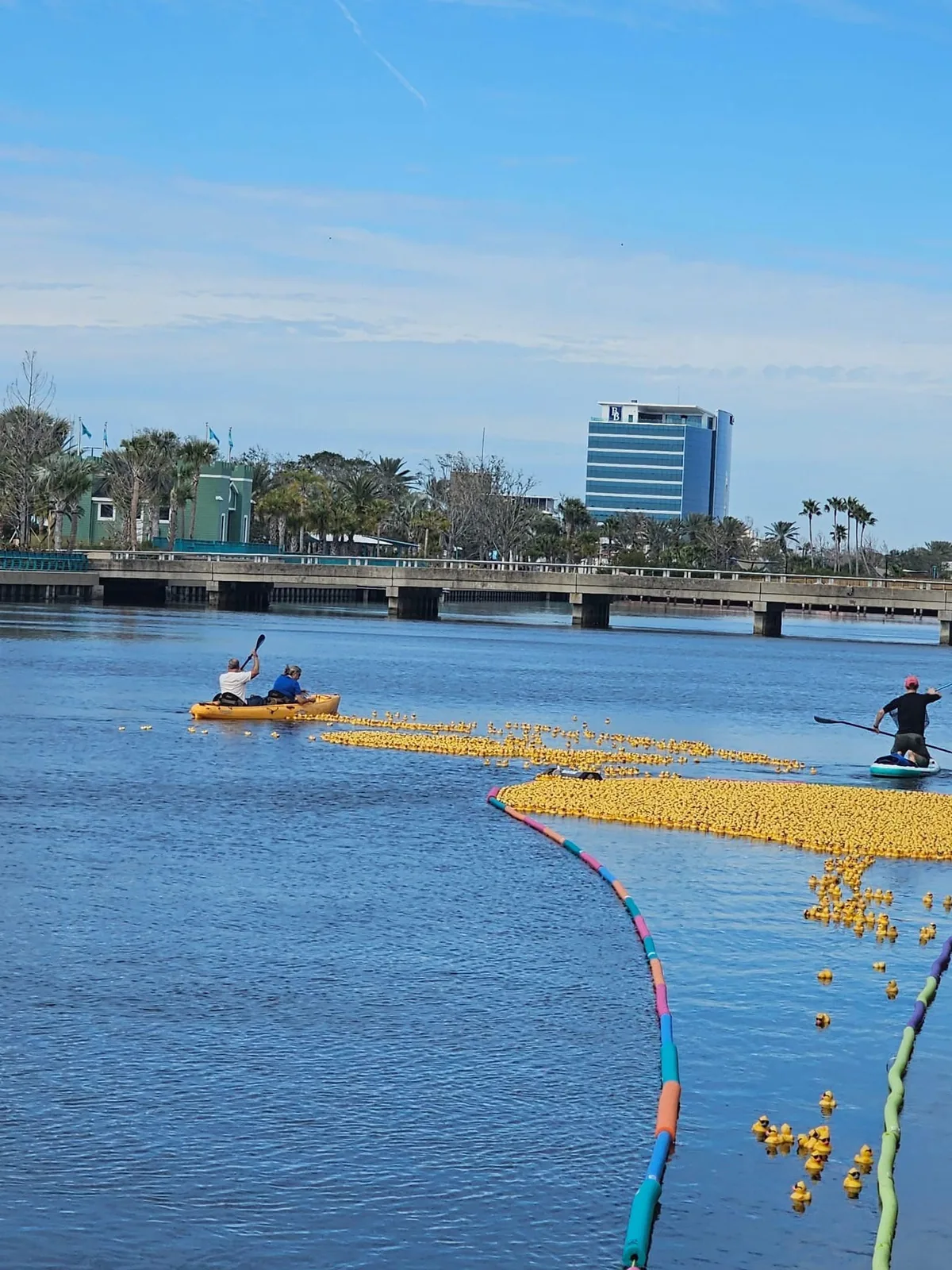
- Kayaks and pool skimmer nets gather the ducks.
- Rinse them in their crates. Leave the tags on.
- Wrap the pallets (we send the wrap) and send us a photo.
See the details
- Laundry baskets with holes make great scoops; the water drains right out.
- Fill each crate to the top and close it with two zip ties. No counting needed.
- Have everything ready for pickup within 14 days.
You're in good company
Big cities run these the same seven steps.
Quick answers
Will someone from Derby Duck Races be there?
We're on call all day. Your team runs the race, and we make sure you have everything you need well before it starts.
How do we know who won?
Every duck's number is tied to the person who adopted it. The first numbers out of the trap win, and you look them up in seconds.
What if it rains?
Ducks race in the rain. If a storm rolls in, your rules can let you draw winners at random instead.
Will we lose ducks?
The floating line keeps the flock together from start to finish. We send a few extras, and every duck comes back to race again.
You've got this.
Seven steps, one great day, and a team with 37 years of race experience. Questions anytime: info@duckrace.com