Duck Race vs. Gala Dinner: Which Fits Your Nonprofit?
An honest comparison of duck races and gala dinners: what each commits you to, how many people each can reach, and which one fits the goal you actually have.

The gala is the default choice for a reason, and we’re not going to pretend otherwise. But it’s a very different instrument than a duck race, and picking the wrong one costs you a year. So here is the honest comparison.
A gala sells seats. A duck race sells ducks.
That one sentence explains most of what follows.
Seats are finite. Your ballroom holds what it holds, and once the last table is sold your revenue is capped no matter how much your community wants to give. Duck adoptions don’t have that ceiling. You can grow adoptions a long way without renegotiating a venue.
Where your money is committed
A gala asks you to spend before anyone RSVPs: venue deposit, catering priced per plate against a minimum, AV, décor, printing, often entertainment. Much of it is contractual. If attendance disappoints, those costs don’t shrink. Your margin does.
A duck race runs the other direction. Most partners line up local sponsors first, so the race is funded before the first duck is adopted. We supply the ducks, the technology platform, and the race-day equipment, and most events run on public waterways with minimal venue fees. Your main investment is volunteer time.
The practical difference: with a gala, break-even sits in front of you all season. With a duck race, it’s usually behind you before the event starts.
Who can actually say yes
A gala asks for a significant per-seat price, a free evening, and often a jacket. That’s a real filter. Your most generous donors will come. Most of your community can’t.
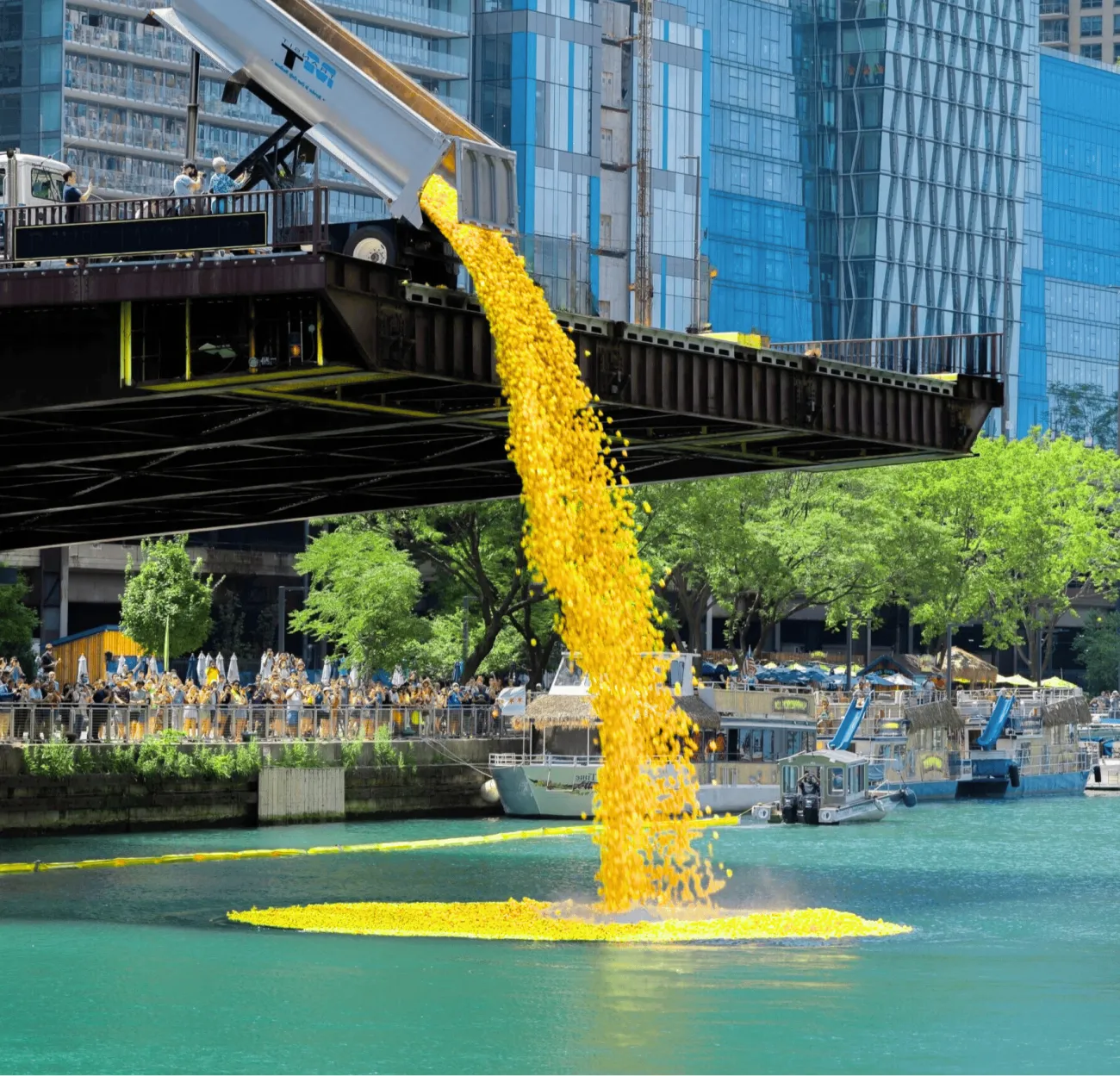
A duck race asks for $5. The event itself is free to attend, so a family can show up, watch ten thousand ducks come around the bend, and go home having supported you for the price of two coffees.
Here’s the part that surprises people: in 2025 the average adoption on our race platform was $50, about ten ducks. Supporters can give at a meaningful level without ever feeling like they’ve been hit up for a major gift.
A gala deepens relationships with people who already support you. A duck race does that and introduces you to people who were never going to buy a seat.
Side by side
| Gala dinner | Duck race | |
|---|---|---|
| Revenue ceiling | Room capacity | No practical cap |
| When costs land | Committed up front | Typically sponsor-funded first |
| Entry price | Per-seat, significant | $5 per duck |
| Who can join | Ticket buyers | The whole community |
| To double revenue | Bigger venue, more plates | More ducks |
Doubling a gala means renegotiating your venue and paying for twice the catering. Doubling a duck race means selling more ducks.
We’ve deliberately left the gala column qualitative, because the only numbers that matter for this decision are yours. Pull last year’s gala P&L, fill in your real venue deposit, per-plate cost, and seats sold, and put them against the duck race column. That comparison will settle it faster than any national average could.
Where a gala genuinely wins
A gala is the better instrument for major-gift cultivation. A room, a program, a live ask, and a paddle raise remain extraordinarily effective at moving a small number of people to give a lot. If your top ten donors represent most of your annual revenue, a gala speaks directly to them in a way a $5 duck never will.
A duck race is the better instrument for breadth: more households touched, more sponsor visibility, more community goodwill, and an event that compounds year over year.
Plenty of organizations run both, using the duck race to fill the top of the funnel that the gala later converts. That’s often the strongest version of the plan.
Making the call
Choose the gala if your revenue is concentrated in a handful of major donors and your board is ready to work a room.
Choose the duck race if you want a fundraiser your whole community can join, with sponsors typically funding the front end and a ceiling you set rather than one your venue sets.
If you want to see what the duck race side would actually look like, the math on a $50,000 first race breaks the goal down into the number of supporters it actually takes. If you’re weighing other formats too, we’ve done the same comparison against a golf tournament.
Since 1988 we’ve helped more than 2,000 organizations raise over $280 million this way.
Four quick questions below and we’ll build you a free race plan with a realistic range for your goal, your organization type, and your community.