What Prizes Should You Give at a Duck Race?
How many winners to plan, what a good grand prize looks like, who pays for prizes, and how the winning duck is picked at a duck race fundraiser.
Prizes are the part of a duck race that every adopter pictures: their number coming through the trap first. They’re also the easiest part to overthink. Here’s what works.
Keep it simple: for a 5,000-duck race, plan three to five winners, with one headline prize (around $1,000 cash, a getaway, or a gift card) and a few smaller local prizes. The host picks and funds the prizes, ideally donated by sponsors so they don’t eat into what you raise. The first duck through the finish-line trap wins, matched to its adopter by number.
What prizes do duck races usually offer?
One headline prize and a handful of smaller ones. For a 5,000-duck race, a $1,000 cash prize is a pretty standard headline, and a getaway or a big gift card works just as well.
Here’s a simple structure that fits most first races:
| Prize | What it usually is | Where it usually comes from |
|---|---|---|
| Grand prize | Around $1,000 cash, a getaway, a gift card, or for bigger races a donated vehicle | A title sponsor or a local dealership |
| Second and third | Smaller local prizes: gift cards, dinners, experiences | Local businesses, often in exchange for recognition |
| Fourth and fifth (optional) | Something fun and local | Sponsors, board members, a favorite shop in town |
The donated vehicle deserves its own line. Car and Jeep dealers are often the first easy yes on a sponsor list, and a donated car makes a memorable headline prize.
How many winners should a duck race have?
Three to five for a 5,000-duck race. That’s enough to give supporters several shots at winning without turning your race-day announcement into a 20-minute list.
More winners don’t have to mean more cost. Second through fifth place are easy to get donated, because a restaurant or shop can put up a gift card and hear its name read over the mic. Keep the list short enough that you can announce every winner while the crowd is still at the finish line.
Who pays for the prizes?
The host picks and funds the prizes, and the best version is donated. When sponsors put up the prizes, every dollar of adoption money still goes to your cause.
Here’s how the work splits:
- Your team chooses the prizes, lines up the donors, and delivers the prizes to the winners after the race.
- Derby Duck Races helps you structure the prize list, adds the prizes to your race site so adopters can see what they’re playing for, and identifies the winners from the duck tags.
A prize sponsor is a concrete ask with a clear payoff, which makes it a good first ask for a business that’s new to you. Our sponsorship playbook covers prize sponsors alongside the other tiers, and what you can offer sponsors has the full benefit list.
Does a bigger prize sell more ducks?
We don’t have data showing that it does, so we won’t promise it. What we do have data on is teams.
Races with more than 10 teams sold 2.3x more ducks than races with fewer, across 37 completed races, and hit their goal 44% of the time versus 26%. So if you have extra energy to spend, spend it recruiting team captains rather than chasing a bigger grand prize. The team numbers are the ones we can actually back up. Our guide to what the host does covers how teams fit into your side of the work.
How is the winning duck picked?
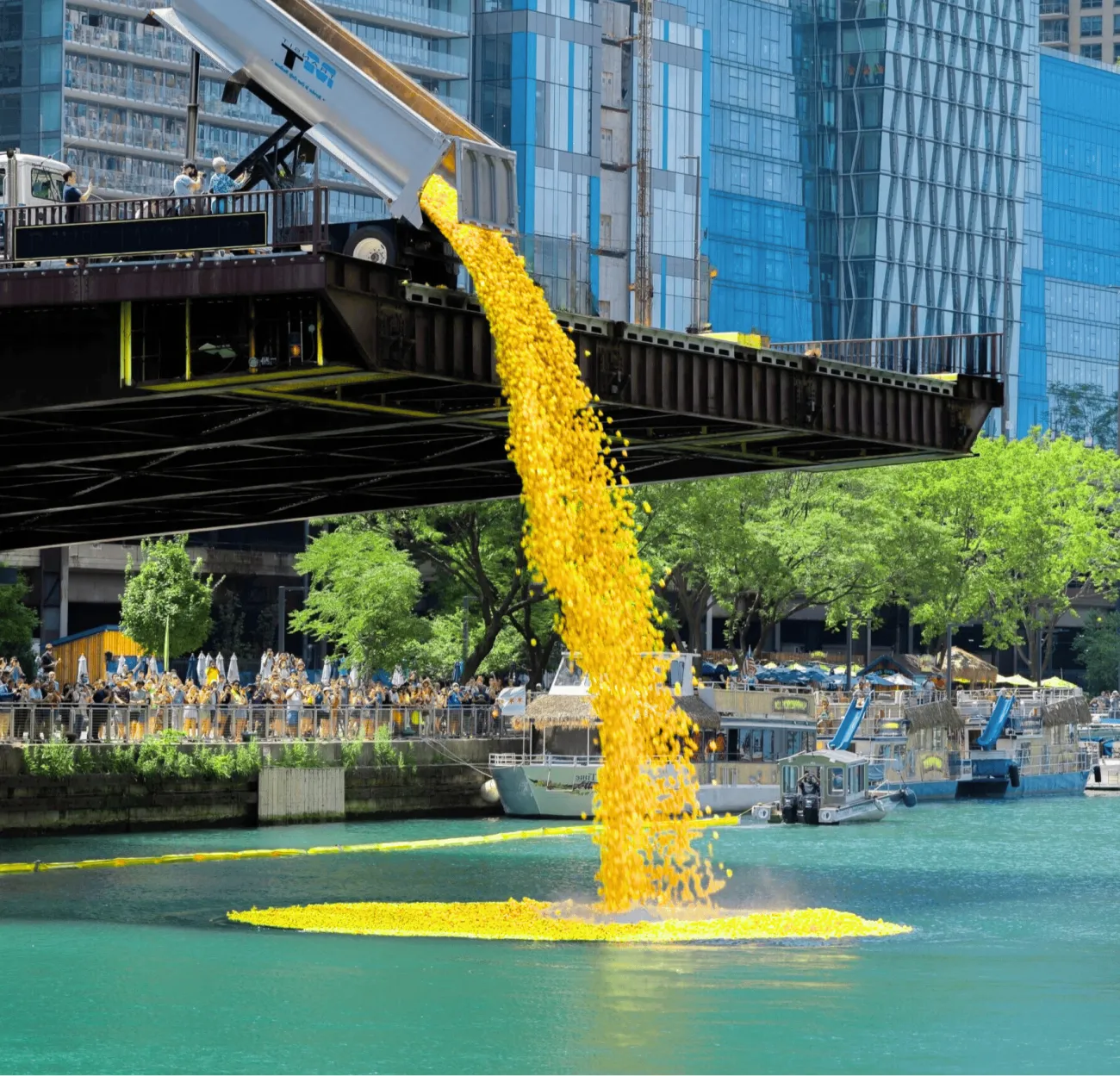
The first duck through the finish-line trap wins. Every duck carries a waterproof number tied to its adopter, and the trap is only one duck wide, so there’s never a question about which one finished first.
Here’s the sequence on race day:
- Close adoptions at the cutoff time you set during race week.
- Run the winners report in the race software a few minutes before the race.
- Pull the first ducks through the trap, in order, and read their numbers.
- Verify each number against the report before anyone says a name out loud.
- Announce the winners and get the photos while the crowd is still there.
Only adopted ducks can win. If a duck with no adopter comes through the trap, it’s skipped, and the next duck takes the spot. For a duck drop or a venue where a true race isn’t practical, winners come from an auditable random draw instead. Our guide to getting ducks in and out of the water covers the trap and the catch.
Are there rules about duck race prizes?
Set your prize rules before you print anything. Some hosts can’t award cash at all, so they go with gift cards, experiences, or donated items instead.
When should you lock in your prizes?
During sponsor season, before adoptions open. The same businesses you’re asking to sponsor are often the ones who’ll donate prizes, so ask for both in the same meeting.
Locking prizes early also means they make it onto your race site, your posters, and your social posts before the adoption push starts, which gives every one of them something concrete to say. Our planning timeline shows where prizes fall in the months before race day.
Frequently asked questions
What is a good grand prize for a duck race?
For a 5,000-duck race, around $1,000 cash is a pretty standard headline prize, and a getaway or a big gift card works too. Bigger races sometimes get a vehicle donated by a local dealership. The best grand prize is one a sponsor donates, so it doesn’t come out of your adoption money.
How many prizes does a duck race need?
Three to five winners is plenty for a 5,000-duck race: one headline prize and a few smaller local prizes. Keep the list short enough to announce every winner while the crowd is still at the finish line.
Who provides the prizes for a duck race?
The host picks, funds, and delivers the prizes, ideally donated by local sponsors. Derby Duck Races helps structure the prize list, adds the prizes to your race site, and identifies the winners from the duck numbers.
How do you know which duck won?
Every duck has a waterproof number tied to its adopter. The finish-line trap is only one duck wide, so ducks come out one at a time and the first number out wins. Your crew verifies each number against the winners report before announcing it.
What happens if the winning duck wasn’t adopted?
It’s skipped. Only adopted ducks are eligible to win, so if a duck with no adopter comes through the trap first, the next duck through takes the prize. Every duck still gets tagged, adopted or not, so late adopters can get a number right up to the cutoff.
Keep the prizes simple and the teams busy
A clear headline prize, a few local extras, all donated, all on the race site before adoptions open. That’s the whole prize strategy. Put the rest of your energy into sponsors and team captains, because that’s where the ducks get sold.
Want a race plan sized to your goal? Four quick questions get you a free one.