Corporate Sponsorship Ideas for Your Duck Race
Sponsor tiers, creative add-ons, and the ask that actually works: how to line up the local business sponsors most partners use to fund a duck race up front.
Sponsorship is what decides how much of your duck race revenue actually reaches your mission. Most partners line up local sponsors first, so the race is funded before the first duck is adopted, which means the adoptions that follow aren’t paying off your overhead.
Below: how to build the package, and how to make the ask.
Why this is an easier sell than most sponsorship asks
A lot of sponsorship pitches are really donation requests in a business suit. A duck race genuinely isn’t, and you should say so out loud:
- You’re offering a family audience, not a narrow one. Sponsors reach the whole community, not just the people who could afford a ticket.
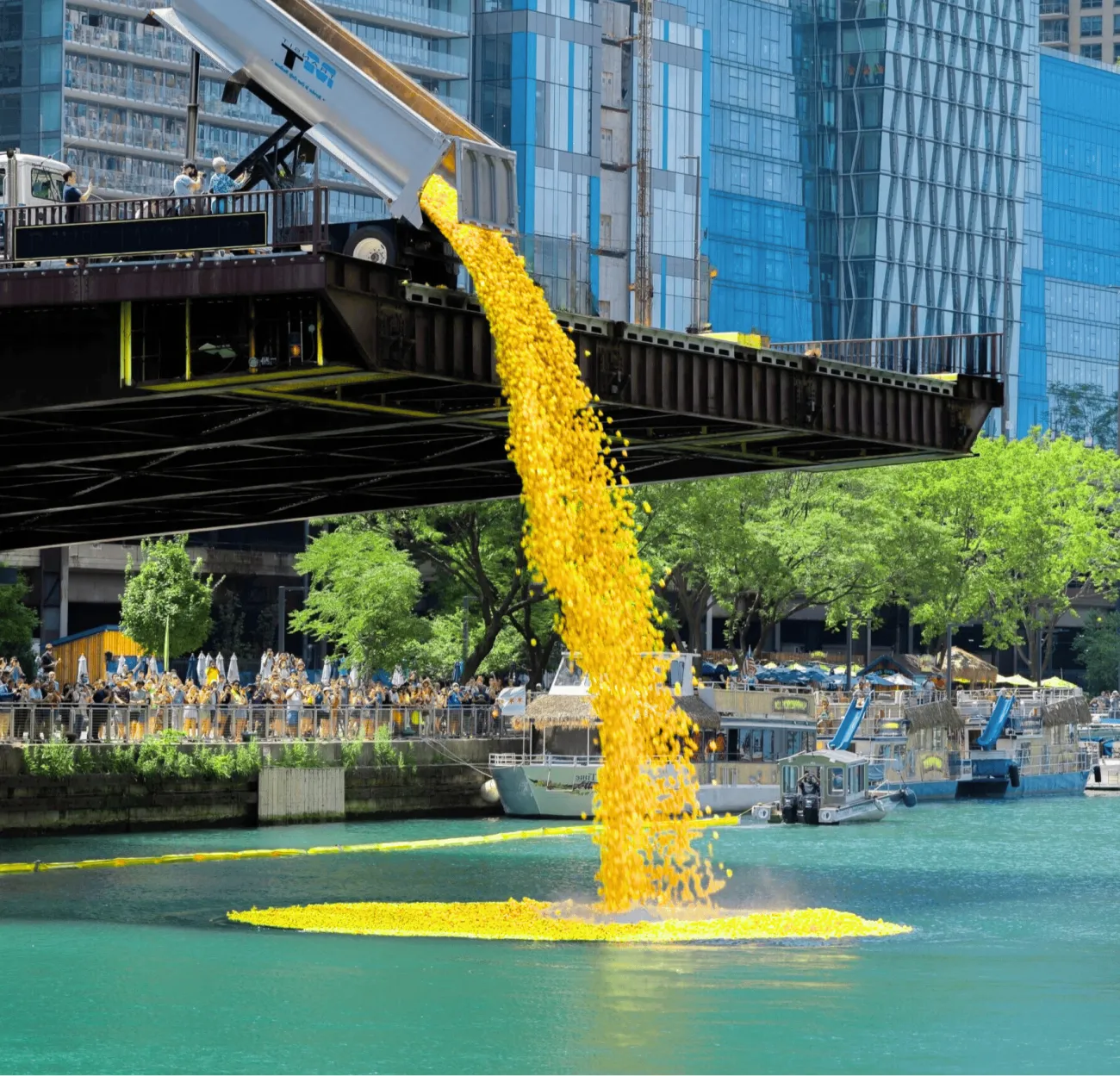
- The event is ridiculously photogenic. Ten thousand yellow ducks rounding a bend is content people actually share, and logos ride along for free.
- Nobody’s brand is at risk. No marketing director has ever worried about being associated with rubber ducks.
- The window is long. Your adoption website runs for months, so a sponsor’s logo works the whole season rather than for one evening.
Build three to five tiers
Don’t improvise this. Write the tiers down, name them, price them, and list exactly what each one includes. Three to five is right. Fewer looks thin, more creates decision paralysis.
| Tier | Typical benefits |
|---|---|
| Presenting | Name in the event title, logo on the adoption website and all print, PA recognition, banner at the drop, social feature |
| Gold | Logo on website and print, banner at the event, PA mention, social post |
| Silver | Logo on website, name on print, PA mention |
| Community / small business | Name on website and event signage |
Price the top tier at what your largest realistic sponsor can say yes to, then work down. It’s far easier to move a business up a tier next year than to raise a price on them.
For more on what you’re actually able to offer, we’ve written up the full benefit list.
The sponsorships that get renewed
Those tiers are the floor. The sponsors who come back year after year usually got something more interesting than a logo placement:
- Duck sponsor. A business buys a block of ducks and gives them to employees or customers. They get goodwill, you get adoptions, and suddenly a whole office has a duck in the race.
- Prize sponsor. A restaurant, dealership, or shop provides the prize in exchange for recognition. Costs you nothing and makes the prize better. Here’s what prizes to offer and how to structure them.
- Corporate team. Departments compete against each other with their own duck blocks. Costs almost nothing to organize and the internal trash talk does your marketing for you.
- Matching sponsor. A business matches adoptions during a set window. This is a strong tool for a late-campaign push, and sponsors love the visibility of “doubled by.”
- In-kind partner. Printing, signage, water safety, tents, sound. Every in-kind dollar is a dollar you don’t spend.
- Milestone sponsor. A business underwrites a specific number (“the 5,000th duck”) with a prize attached. Cheap, memorable, and it hands you a reason to post.
Make the ask concrete
The most common sponsorship mistake is a vague ask. “Would you consider supporting our event?” invites an equally vague answer.
Ask like this instead. This is a template, so swap in your own event, numbers, and tier price, and keep the shape:
“We’re putting 10,000 ducks in the river on May 16th for the food bank. Last year we drew about 1,200 people to the riverfront and reached another 4,000 households online. I’d like you to be our Gold sponsor at $[your Gold tier price]: logo on the adoption website for four months, a banner at the drop, and a feature post to our list. Can I send you the one-pager?”
That ask names the event, the date, the cause, the audience, the tier, the price, the deliverables, and the next step. It’s answerable in one word.
Start earlier than feels necessary
Most partners begin planning three to seven months before race day (here’s the full planning timeline), and sponsorship should be the first workstream, not the last. Plenty of local businesses set marketing budgets annually or quarterly, and reaching them after the budget is set is a common reason a good prospect says “next year.”
- Months 1–2: build the target list, finalize tiers, start asking. Board members open doors here, so give them a script.
- Month 2–3: confirm sponsors, collect logos, get them onto the adoption website as it goes live.
- Month 3–4: activate sponsors. Ask them to share the adoption link with their employees and customers.
That last step is an easy one to skip. Every sponsoring business has a staff list and a customer base, and asking them to share the link costs nothing. For a lot of organizations it turns out to be one of the strongest channels they have.
Then actually report back
Send a real recap after the event: what you raised, how many people took part, where their logo appeared, and photos with their name visible in frame. A sponsor who can show their boss what the money bought is a sponsor who renews, and renewing a sponsor is usually easier than finding a new one.
Once you’ve got sponsors locked, the race-day plan covers getting their banners in the right place and their logos in the photos.
Since 1988 we’ve helped more than 2,000 organizations raise over $280 million. We handle the ducks and freight, the finish-line catch system, your custom adoption website, marketing, print materials, and reporting, so your team can spend its time where only you can: on your community and your sponsors.
Four quick questions below and we’ll build you a free race plan with a sponsor strategy sized to your goal.