Duck Race vs. 5K: Which Community Fundraiser Raises More?
Duck race vs. 5K fundraiser: the per-runner costs that scale with signups, participation barriers, weather risk, and when a 5K is still the better event.
From a distance a 5K and a duck race look like the same fundraiser: outdoor, community-facing, a start line and a finish line. Their economics run in opposite directions.
The duck race nets more, and the gap is the cost structure. A 5K’s costs scale with signups, so a 400-person race at $35 an entry commonly clears around $1,000 from registration once fixed costs come off. A duck race decouples the two. At our race platform’s 2025 average of $50 per supporter, 400 supporters gross $20,000, and against a flat package starting under $9,000 that nets roughly $11,000 with no per-person cost attached.
What does a 5K actually cost to put on?
More than the shirt, which is the only cost most committees remember. Race budgets split into two piles, and the split is the whole story.
Fixed costs hit whether nine people register or nine hundred: the municipal permit, a police detail or road-closure fee, event insurance, portable toilets, an EMS presence, the timing company’s base fee, cones, signage, awards, and promotion. Depending on your course and your city, that pile commonly lands between the low four figures and $8,000. Road courses cost meaningfully more than park courses, since police details bill by the hour and some cities want a paid traffic plan before signing the permit.
Variable costs are charged per human being who signs up: the shirt, the bib, the chip, aid-station water and cups, and whatever’s waiting at the finish. Across most markets that’s commonly $15 to $30 a head once you’ve ordered a decent shirt.
The shirt deserves a paragraph of its own. You have to order shirts before registration closes, which means you either over-order and eat the surplus or under-order and hand disappointed runners an IOU. Either way, that shirt is why a bigger race is not proportionally a more profitable one.
How do a duck race and a 5K compare head to head?
| 5K / fun run | Duck race | |
|---|---|---|
| Typical price per entry | $25 to $40 per runner | $5 per duck |
| Typical transaction size | One registration | $50 average, about 10 ducks |
| Cost per additional participant | Real: shirt, bib, chip, aid station | Essentially zero |
| Fixed costs | Permits, police or park fees, timing, insurance, EMS, portables | Package plus prizes; sponsors typically cover it |
| Must supporters attend? | Yes, attendance is the product | No, adoptions happen online |
| Who gets left out | Anyone who can’t or won’t run that morning | Essentially nobody |
| Weather risk | High: walk-up registration collapses, shirts already bought | Low: adoptions are collected in advance |
| Local competition | High: most towns have a charity race most weekends | Low: usually the only duck race in the county |
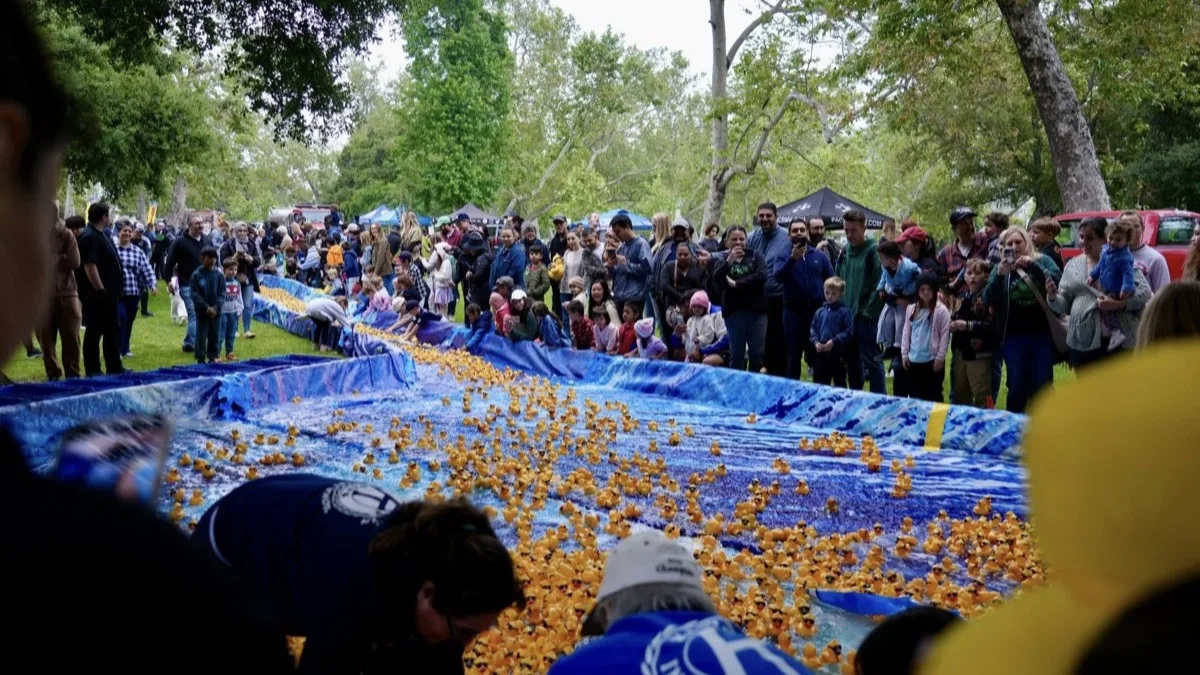
| Spectators | Mostly family waiting at the finish | A few hundred to a few thousand; watching is the event |
| Media interest | Modest | High: a river full of ducks is a photo desk’s dream |
| Volunteer needs | Marshals at every turn, water stations, packet pickup, timing | Sponsor outreach, a duck-prep night, drop-day crew |
| Year-two growth | Hard; competing for the same local runners | Steady, and the county has room for one duck race |
Why doesn’t a bigger 5K mean proportionally more profit?
Because a large share of every registration fee walks straight back out the door as merchandise and timing.
Here’s the arithmetic with the assumptions stated, so you can swap in your own numbers:
- Registration price: $35
- Variable cost per registrant: $20 (shirt, bib, chip, aid station, finish-line food)
- Contribution per registrant: $35 − $20 = $15
- Fixed costs: $5,000 (permit, police, timing base fee, portables, insurance, signage)
- Break-even: $5,000 ÷ $15 = about 334 registrants
Now scale it. At 400 registrants you net 400 × $15 = $6,000, minus $5,000 fixed, for $1,000 from registration. Double the field to 800 and you net 800 × $15 = $12,000, minus $5,000, for $7,000. Growth helps. It just doesn’t help nearly as fast as the headline number suggests, and doubling a 5K is genuinely hard.
Run 400 supporters through a duck race instead: 400 × $50 = $20,000, and supporter number 401 adds another $50 at no additional cost to you. Your one cost is the flat package, which sponsors typically cover up front. Nobody needs a shirt. Nobody needs a chip. There’s no aid station.
The 5Ks that raise serious money aren’t raising it from registration at all. They raise it from peer-to-peer pledges, where each runner commits to bringing in $250 or $500 from their own network. A runner who raises $300 is worth twenty registrations. If your organization has the infrastructure and the discipline to run real pledge fundraising, a 5K can out-raise plenty of other events. Most groups don’t build that, and then wonder why 400 runners produced $1,000.
Which one reaches more of your community?
The duck race reaches more people, by a wide margin. A 5K sells running. A duck race sells watching, and far more of your town is available for the second one.
Think about who your 5K quietly excludes. The 74-year-old who has mailed you $250 every December for eleven years. The mom with a two-year-old and a four-year-old on a Saturday morning. Your treasurer, eight weeks out from a knee replacement. Anybody who works weekends. The family that doesn’t own running shoes and isn’t buying a pair to support your cause. Your donor base almost always skews older than your runner base, which means your best givers and your event’s participants are two different groups of people.
Adopting a duck asks for five dollars and no athletic ability whatsoever. Kids get it instantly. Grandparents get it instantly. And because adoptions happen on a website, physical presence is optional: your treasurer can adopt ten ducks from the recliner, text half her street to bet against her numbers, and still be part of the day. That’s a $50 gift you were never going to collect at a starting line.
A 5K gets people out of bed and physically standing in a group that cares about your mission, and there’s real value in that shared experience. It just costs you a shirt each time.
What happens if it rains?
Rain hurts a 5K more than almost any other fundraiser, because you’ve already bought the shirts.
Pre-registrations mostly hold, since that money’s collected. What disappears is day-of registration, which is often a meaningful share of a small race’s field. Meanwhile the timing company still bills you, the police detail still bills you, and 400 shirts are sitting in boxes in the race director’s garage. Costs don’t shrink when the sky opens.
Duck race revenue arrives weeks ahead of the drop. Postpone the race, move it to a pool or a rented tank, or run the finish on a livestream, and the fundraising outcome barely changes because the adoptions are already in. It’s why virtual and hybrid duck races exist in the first place, and it’s the same insurance policy that makes a duck race less fragile than a golf tournament on one committed date.
Which one grows more in year two?
Duck races generally grow. 5Ks generally plateau, and the reason is the local calendar.
Your town probably has a charity race most weekends from September through November. Ten organizations, one pool of maybe 300 committed local runners, all chasing the same people. Growing your 5K usually means taking registrants from another nonprofit’s race, which is a bleak way to run a fundraising program and doesn’t expand the pie for anyone.
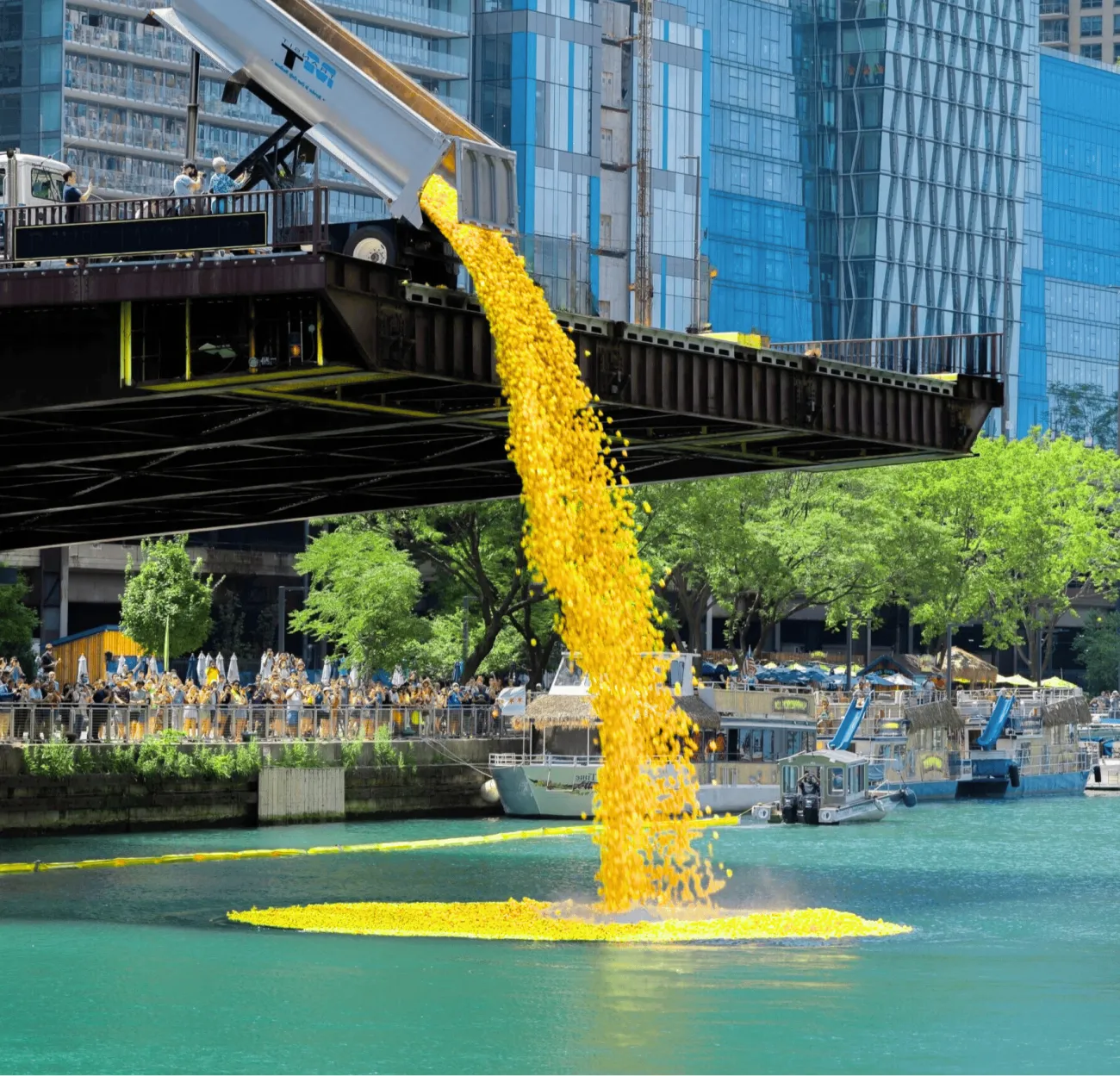
A duck race is typically the only one in the county. Year-two growth comes from sponsors renewing at a higher tier, teams and classrooms competing against each other, and the several hundred people who stood on the bank last spring and told a neighbor about it. A typical first-year race grosses $20,000 or more and climbs from there. The publicly reported results from races that have been running for decades sit in a different order of magnitude entirely.
When is a 5K the better call?
Several situations, and they’re not edge cases.
- Your mission is health, fitness, or medicine. A hospital foundation, a cancer center, a heart or lung association chapter, a youth running program. The form matches the cause, and donors feel that alignment in a way no spreadsheet captures.
- You already have a running community. If a local running club will deliver 200 people on day one, you’re starting where most 5Ks finish. That’s an asset, not a maybe.
- You’ll follow through on peer-to-peer pledges. Pledge-based races can beat a first-year duck race outright. The catch is that pledge programs take staff time and follow-up most volunteer committees can’t sustain.
- Your sponsors are athletic brands. Orthopedic practices, physical therapy clinics, running stores, and gyms will fund a road race enthusiastically. Those same businesses are a harder sell on a duck drop.
- It’s a memorial run. When the run itself is the tribute, the format is the point. Don’t turn that into anything else.
- You want the shirt. A good race shirt is a wearable billboard jogging around your town for two years. A duck race has no equivalent.
These aren’t mutually exclusive. Some organizations keep the 5K in October and add a duck race in the spring. A few have dropped several hundred ducks into a fountain at the 5K finish line, which is a fine way to test the idea before committing.
What are the best alternatives to a 5K fundraiser?
The realistic alternatives to a 5K are a family fun day, a ride or paddle event, a pure peer-to-peer campaign, and a duck race. Any of them beats fighting nine other races for the same 300 local runners on the same eight good Saturdays in October.
A walk or a family fun day is the smallest change you can make and often the smartest. You keep the morning, the sponsors, the route, and the volunteers who already know their corners. You drop the timing company, the chip rental, and the quiet athletic barrier that kept a third of your donor list at home. What you also drop is the serious-runner crowd, and with them the registration fee they’ll pay without blinking, so your per-head revenue goes down even as your headcount goes up. A ride, a paddle, or a dog jog is the same instinct pointed at a less crowded calendar, and it keeps the outdoor format your sponsors signed up for.
A pure peer-to-peer campaign is the ruthless option. Look at where the money in your 5K came from and it was pledges, not entries, so keep the pledges and skip the shirts, the permit, the police detail, and the 6 a.m. call time. It works. It’s also a worse morning, and some of what you’re buying with a race day isn’t on the ledger.
A duck race keeps the community morning and takes the per-person cost out of it, because your cost is a flat package instead of a shirt and a bib for every attendee. Ten thousand people showing up costs you the same as two thousand. That flat package is also real money owed before you’ve raised any, which is the tradeoff you’re weighing. Our fundraiser comparison guide runs the numbers on each.
Frequently asked questions
How much does a 5K fundraiser actually net?
Less than the gross suggests. Roughly half of each registration walks back out as shirts, bibs, and timing chips, and then permits, police, insurance, and portable toilets come off the top. A 400-person race charging $35 commonly clears around $1,000 from registration alone. Sponsorships and peer-to-peer pledges, not entry fees, are where a profitable 5K actually makes its money.
Is a 5K worth it for a small nonprofit?
It can be, if you’ve already got a running club that will turn out, athletic sponsors, or a health-related mission. It’s a poor fit if you’re counting on entry fees alone to fund the program, since roughly half of every fee goes back out as merchandise and timing. Without pledge fundraising, most small 5Ks net far less than their organizers expect.
How many people does a duck race need?
Fewer than most first-timers assume, because supporters buy in packs rather than one at a time. Our 2025 average adoption was $50, or about ten ducks at $5 each, so a 5,000-duck race needs roughly 500 supporters and a 10,000-duck race needs about 1,000. That’s one school community, one congregation, or one active service club working its lists well.
Do supporters have to attend a duck race?
No, and that’s the structural difference. Adoptions happen on your race website, so a supporter in another state can back you and never see the water. A crowd on race day drives energy, press coverage, and next year’s growth, but this year’s revenue doesn’t depend on who shows up. A 5K’s revenue depends entirely on who shows up.
Can we run a 5K and a duck race in the same year?
Yes. Put them in different seasons so they aren’t competing for the same sponsors or the same exhausted volunteers. The two events pull different crowds anyway. The 5K reaches your runners and your athletic sponsors. The duck race reaches families, older donors, and everyone who’d rather stand on a bank with a coffee than run three miles.
Pick the event your community can join
If you’ve got a running club, health-aligned sponsors, and a real pledge program, keep the 5K and pour your energy into the pledging, because that’s where the money is. If your registration numbers are flat, your shirt order keeps eating the margin, and half your donor list was never going to run three miles, a duck race reaches a far wider slice of your town for a fraction of the per-person cost.
Forget the spreadsheet for a second and think about two people. There’s the guy who ran your 5K last October in 24:40. He runs four of these a year, he has a drawer full of your shirts, and he’d have been out running that Saturday whether you held an event or not. Then there’s the grandmother on Third Street, who adopted ten ducks in February because her granddaughter asked her to, watched the finish from a folding chair with a coffee, and spent the next two weeks telling everyone at church about it. Your 5K was built for the first one. Your town is mostly made of the second.