Which Fundraiser Should You Run? 9 Compared on Cost and Profit
Nine fundraisers compared on upfront cost, risk, volunteer hours, reach, and revenue ceiling, plus a straight answer on which one fits your situation.
Every fundraiser looks reasonable in a board meeting. The differences that matter show up in what you spend before anyone donates, and what happens to that money if turnout disappoints.
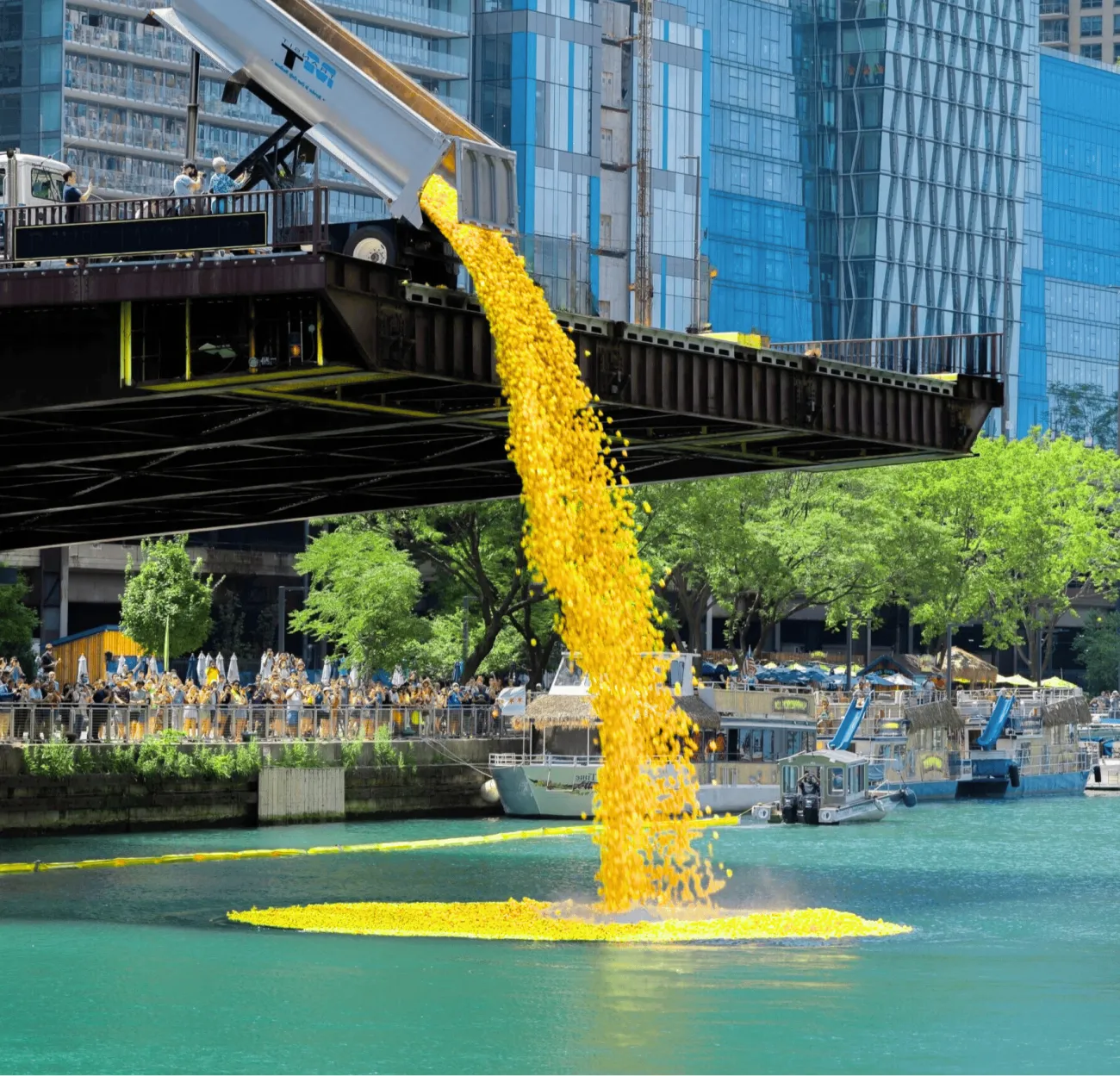
Compared across nine common fundraisers, a duck race carries the lowest financial risk relative to its revenue ceiling. Galas and golf tournaments typically commit $15,000 to $60,000 before a guest registers. Duck adoptions presell online at $5 each, and because our race platform’s 2025 average adoption was $50, roughly 1,000 supporters produce a $50,000 race. A gala still wins if your donors write five-figure checks.
How do all nine fundraisers compare on cost, risk, and reach?
Here’s every option on one screen. Dollar and hour figures are typical ranges for a mid-size organization in a mid-size market, based on how these events usually get run. Treat them as a starting point for your own math, then call your local course, venue, and printer and swap their quotes in.
| Fundraiser | Upfront cost | Risk if turnout is low | Volunteer hrs | Reach | Revenue ceiling | Online | Repeats |
|---|---|---|---|---|---|---|---|
| Duck race | Under $9,000 to start, usually sponsor-covered | Low. Revenue presells | 150-400 | Whole town, free to watch | $20,000+ gross year one, so roughly $11,000 net after the package | Yes | Grows yearly |
| Golf tournament | $15,000-$30,000 | High. Course bills you regardless | 100-250 | Narrow. Roughly 100 to 144 players | Medium. Tee times cap it | No | Tends to flatten |
| Gala | $20,000-$60,000+ | High. Per-plate count is committed | 300-800 | Narrow. Your top donors | High, with the right room | Partly | Costly to keep fresh |
| 5K / walk-a-thon | $3,000-$10,000 | Medium. Costs scale with entries | 100-300 | Broad, skews active adults | Low to medium | Partly | Very well |
| Silent auction | Low cash, heavy procurement | Low cash risk, high effort risk | 200-500 | Narrow. The room you fill | Typically $10,000-$40,000 net | Yes | Item asks tire out |
| Carnival | $5,000-$25,000 | High. One rainy Saturday | 300-800 | Very broad, all ages | Medium. Small transactions | No | Eats volunteers |
| Product sale | Low. Usually consignment | Low, and so is the ceiling | 100-300 | Narrow. Participant families | Low. Vendor keeps 50-60% | Yes | Fatigues by year 3 |
| Restaurant night | Near zero | Very low, and so is the payoff | 3-6 | Narrow. Whoever shows | Very low. 10-20% of sales | No | Very easily |
| Crowdfunding | Platform fees | Low cash, real reputational risk | 40-120 | Your existing list, mostly | Low to medium without a match | Entirely | The list tires |
A note on the duck race row, which is the only one carrying a fixed cost instead of a percentage split. Its revenue column shows gross next to the package price rather than a single net figure, while every other row is netted the usual way. Subtract and you’ll see why hosts repeat it: the package doesn’t get more expensive in year three, and the race usually gets bigger. Published results from named events are collected in how much a duck race can raise.
Why does gross revenue mislead so many boards?
Because gross is the number that goes in the newsletter and net is the number that pays your program officer. A gala grossing $120,000 that spends $55,000 on the ballroom, the band, and the beef nets $65,000. A duck race grossing $50,000 with sponsors covering the package cost nets close to the full amount.
Ask two questions about any fundraiser someone pitches you. What do we owe before the first dollar arrives? How many staff and volunteer hours does it eat? Divide net by hours. That single number reorders most fundraising calendars, which is exactly why we built a ranked list of fundraising ideas by realistic net return instead of by gross.
How does a duck race stack up against each one?
Eight head-to-head breakdowns, in the order they sit on the table above.
Duck race vs. golf tournament
Tee times are the whole story. A course holds roughly 100 to 144 golfers, so your ceiling is fixed before you sell a single foursome, and greens fees, carts, and catering are committed months before you know whether registrations will cover them. Golf still wins when your board is golf-connected and premium foursomes and hole sponsorships sell themselves. That’s a real advantage, and it isn’t rare. Everyone else nets more per volunteer hour selling to the whole town instead of to the golfers in it. Full breakdown in duck race vs. golf tournament.
Duck race vs. gala
A gala wins when your donor base is small, wealthy, and already warm. Two hundred people in a ballroom with a good auctioneer and a live paddle raise will out-earn a thousand $50 duck adopters, and no amount of enthusiasm about ducks changes that. It’s also the most expensive fundraiser on this page to produce, and a guaranteed plate count means the caterer bills you for chairs, not for the people in them. You pay for the empty ones. A duck race inverts that risk: most of the revenue lands before anybody shows up, so the event is a celebration rather than a sales floor. See duck race vs. gala.
Duck race vs. 5K or fun run
These two are closer than any other pairing here. Both are outdoor, family-friendly, repeatable, and welcoming to people who’ve never given you a dollar. They split on unit economics: a $25 to $45 entry costs you a shirt, a bib, a timing chip, and a banana, while a $5 duck costs you the duck, and one supporter routinely adopts ten of them. If you have a running community, run the 5K. Details in duck race vs. 5K fun run.
Duck race vs. silent auction
Silent auctions are procurement projects wearing an event costume. The night itself runs three hours. The work is four months of volunteers walking into local businesses asking for gift certificates, then photographing and cataloguing 90 items, then chasing the winner who went home before paying. Auctions win when you’ve got exceptional inventory and a room of competitive bidders, and they bolt neatly onto an event that’s happening anyway. They struggle when your best lot is a $75 spa basket. A duck race asks local businesses for cash sponsorship instead of stuff, which most of them quietly prefer. More in duck race vs. silent auction.
Duck race vs. carnival or festival
Carnivals build community better than almost anything on this list and rarely fund much. Revenue arrives in $3 increments from ride tickets and funnel cakes, insurance and equipment rental cost real money, and one rainy Saturday can sink it. Volunteer demand is enormous, often 300 to 800 hours. If your goal is a beloved town tradition, run the carnival and stop measuring it by net. If your goal is a number the board can budget against, a duck race is the safer instrument, and plenty of festivals run one as an attraction inside the day. See duck race vs. carnival.
Duck race vs. product fundraiser
Nothing else here is this simple. Sign the consignment agreement, hand out order forms, collect money. What that simplicity costs is 50% to 60% of every dollar walking back out to the vendor, plus the distribution weekend where somebody’s garage holds 400 tubs of cookie dough. Product sales fit young school programs with no volunteer bandwidth and a modest goal. Past that, the math stops working. Compare in duck race vs. product fundraiser and school fundraisers that make the most money.
Duck race vs. restaurant night
Restaurant nights aren’t really a competitor. Treat them as a warm-up. Ten to twenty percent of sales during a four-hour window is a few hundred dollars for three to six hours of promotion, which is a fine return on almost no risk and a good way to keep supporters warm between real events. It just can’t fund a program. See duck race vs. restaurant night.
Duck race vs. crowdfunding
The cheapest thing on this page to start is also the hardest to repeat. Campaigns go to the list you already have, so they rarely bring in a single new donor, and a public thermometer stalled at 40% does quiet damage to your credibility that no follow-up email undoes. Crowdfunding works beautifully with a lead donor’s match, a hard deadline, and a specific object to buy. As an annual habit it wears out fast. Compare the two in duck race vs. crowdfunding.
Which fundraiser should you actually pick?
Match the situation, not the enthusiasm.
| If this is your situation | Start here | Why |
|---|---|---|
| No upfront budget at all | Restaurant night or crowdfunding now, duck race once sponsors commit | Sponsorships can cover a duck race package before you spend cash |
| You need money in six weeks | Restaurant night, a matching-gift push, or crowdfunding | Every real event here needs months. A rushed one loses money |
| Fifty-plus reliable volunteers | Carnival, silent auction, or duck race | These reward bodies. A carnival genuinely needs them |
| Fewer than ten volunteers | Duck race, restaurant night, crowdfunding | All three run on a small core team plus a vendor or a platform |
| You want a signature annual event | Duck race, gala, or 5K | These three compound. Year three beats year one |
| You want new donors, not the same list | Duck race, 5K, or carnival | Free-to-attend, all-ages formats bring strangers into your database |
No budget is the most common situation and the most misunderstood. It doesn’t disqualify you from a real event, it changes the order of operations. Sell sponsorships first. Most of our partners line up local sponsors before a single duck is adopted, so the event is funded before it starts and adoption revenue runs close to net. Can’t find three sponsors? That’s useful information, and it’s cheaper to learn in February than in June. What you can offer sponsors is where to start.
Six weeks isn’t a fundraising timeline, it’s an emergency. Our recommended runway is four to six months for a reason. Take the fast money now, then plan something real for next year.
A tiny volunteer base surprises people, because a duck race looks like it should need an army. It needs six to ten people who each own one thing: sponsorship, adoptions, day-of, marketing. How to build a duck race committee breaks that out, and there are more format ideas in our unique fundraising ideas list.
Sector narrows it further, because a booster club and a Rotary club aren’t solving the same problem. We’ve run this math separately for schools and PTAs, booster clubs and youth sports, and Rotary, Kiwanis, and Lions clubs.
When should you not run a duck race?
Four situations, in rough order of how often they come up.
Your donor base is 40 people who write $10,000 checks. A duck race is a volume instrument, built to turn 1,000 casual supporters into $50,000. That works out to 10,000 ducks and roughly 1,000 people, which is a lot of households to reach and no help at all with a major donor already giving at capacity. Run a gala. Put your energy into the twelve conversations that matter.
You need cash inside 60 days. Adoption revenue builds over weeks of promotion, sponsors need lead time to approve budget, and a rushed race underperforms in a way that poisons year two.
Your town already has one. A second duck race in a community of 8,000 splits the same crowd and the same sponsors, and the newer event usually loses. Ask around first. If a Rotary club two towns over has run one for fifteen years, consider partnering instead of competing, and browse service club fundraiser ideas for alternatives.
No one will own it. Every duck race that underperforms has the same autopsy: sponsorship belonged to the committee, which means it belonged to nobody. If you can’t name that person today, fix that before picking any fundraiser at all.
Frequently asked questions
Which fundraiser raises the most money?
For most organizations it’s a well-run signature annual event plus a major-donor campaign, and neither one is on this table by accident. Among event formats, galas gross the most with a wealthy guest list, while duck races net the most relative to cost and risk. A typical first-year duck race grosses $20,000 or more and grows from there. How much a duck race can raise collects the published results from named events.
What is the cheapest fundraiser to start with no budget?
Crowdfunding and restaurant nights cost close to nothing to launch, and both have ceilings to match. A duck race is the cheapest high-ceiling option, because sponsorships are typically sold first and cover the package before your organization spends a dollar of its own. Packages start under $9,000, and the full cost breakdown shows what that buys.
How far ahead do you need to plan each of these?
Two to four weeks is enough for a restaurant night or a crowdfunding push. A 5K usually needs three months. Golf tournaments, galas, carnivals, and duck races all want four to six. Sponsorship is why: a business you ask in April is spending a budget it set last October. Spring and early-summer Saturdays go first, and they go to whoever booked before Thanksgiving.
How many fundraisers should we run in a year?
One signature event plus two or three low-effort touches is the pattern that works for most small organizations. Four full-scale events splits your volunteers, burns through your sponsor list, and usually nets less than running one of them properly would have. Pick the event that compounds. Fill the rest of the calendar with restaurant nights and small campaigns.
Can we run a duck race without a river or lake?
Yes. Pools, fountains, water slides, fire-hose channels, and even dry drops have all worked. No water is the first thing groups assume rules them out, and it almost never does. A closed street and a fire truck will do it. Our guide to duck race water covers raceway options in more detail.
Where this leaves you
Pick the fundraiser that matches your volunteers, your calendar, and your appetite for risk, not the one that sounded good at the last board meeting. Before the vote, put three numbers on one page for every option in play: what you owe before the first dollar arrives, how many volunteer hours it eats, and what’s left when it’s over. Most boards have never seen all three side by side, and the option somebody’s been championing for two years tends to look different in the third column.
Pick the one your volunteers can survive, then run it for five years.