Duck Race Day Logistics: An Hour-by-Hour Guide
The race-day plan that keeps a duck race running smoothly: crew roles, setup order, the drop, retrieval, and the calls worth making before you need to.
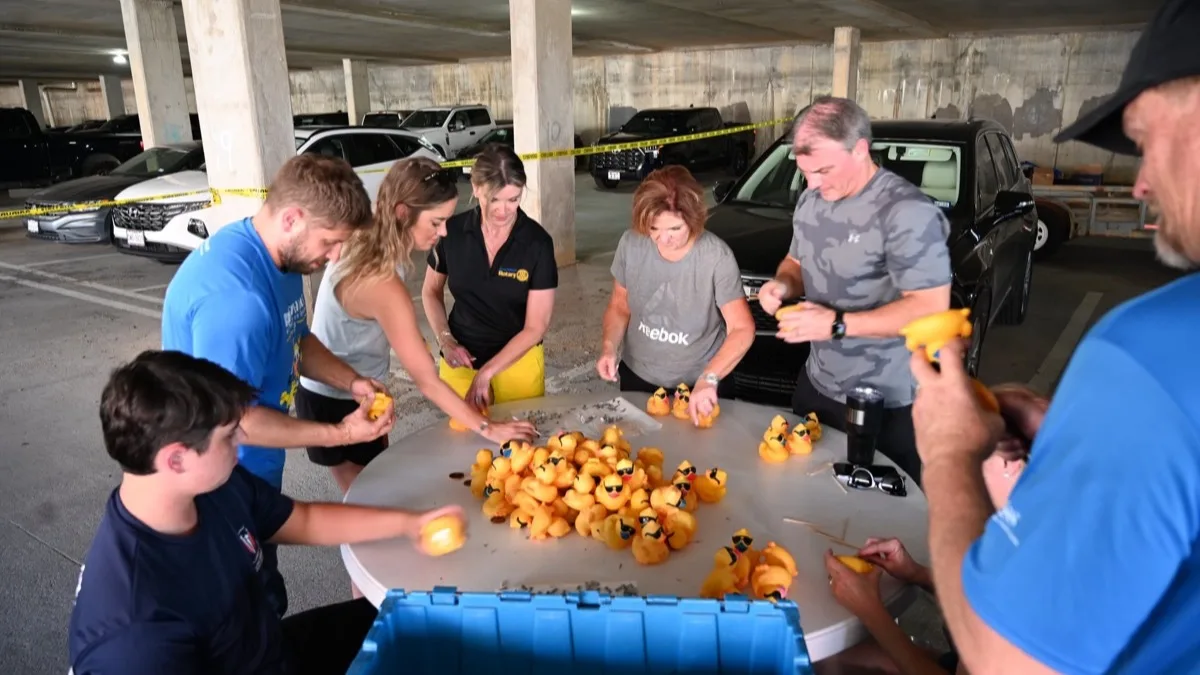
Months of planning come down to about four hours. This is how to organize it, who should own what, and the handful of calls worth making in advance so nobody has to make them under pressure.
Put a name on every job
Every role below needs a name attached, and every name needs a backup. The most common race-day scramble isn’t a missing duck. It’s a job everybody assumed somebody else had.
| Role | Owns |
|---|---|
| Race Director | The schedule and the final call on anything unexpected |
| Water Crew | Booms, nets, the drop, retrieval (the only people in the water) |
| Registration / Adoptions | The on-site adoption table and last-minute sales |
| Winners & Prizes | Verifying duck numbers against the platform, prize handoff |
| Sponsors & VIP | Greeting sponsors, banner placement, photos with logos visible |
| Volunteer Captain | Check-in, assignments, breaks, filling gaps |
| Emcee | Keeping the crowd informed and the energy up |
One person, one group thread, no ambiguity about who makes the call. If you haven’t built the committee yet, we’ve got a guide for that.
The day, hour by hour
T-minus 3 hours: site setup. Booms and containment go in first, because everything else gets positioned relative to them. Then tents, signage, sponsor banners, sound, and the adoption table. Get the water crew into waders early and walk the drop point and finish line with them physically: standing there, not pointing at a map.
T-minus 2 hours: ducks staged. Ducks move to the drop point and get counted into whatever you’re dropping from. This always takes longer than first-timers expect. Protect the time for it.
T-minus 1 hour: volunteers and gates. Check-in and briefing. Every volunteer should be able to answer the two questions strangers actually ask: where’s the bathroom, and how do I adopt a duck. Sound check. Photograph the sponsor banners now, while they’re clean and the light is good.
T-minus 30 minutes: crowd and final adoptions. Emcee starts working the crowd. Announce the adoption cutoff early and often. The last half hour is often strong for on-site sales, and you want the cutoff unambiguous so nobody argues about it afterward.
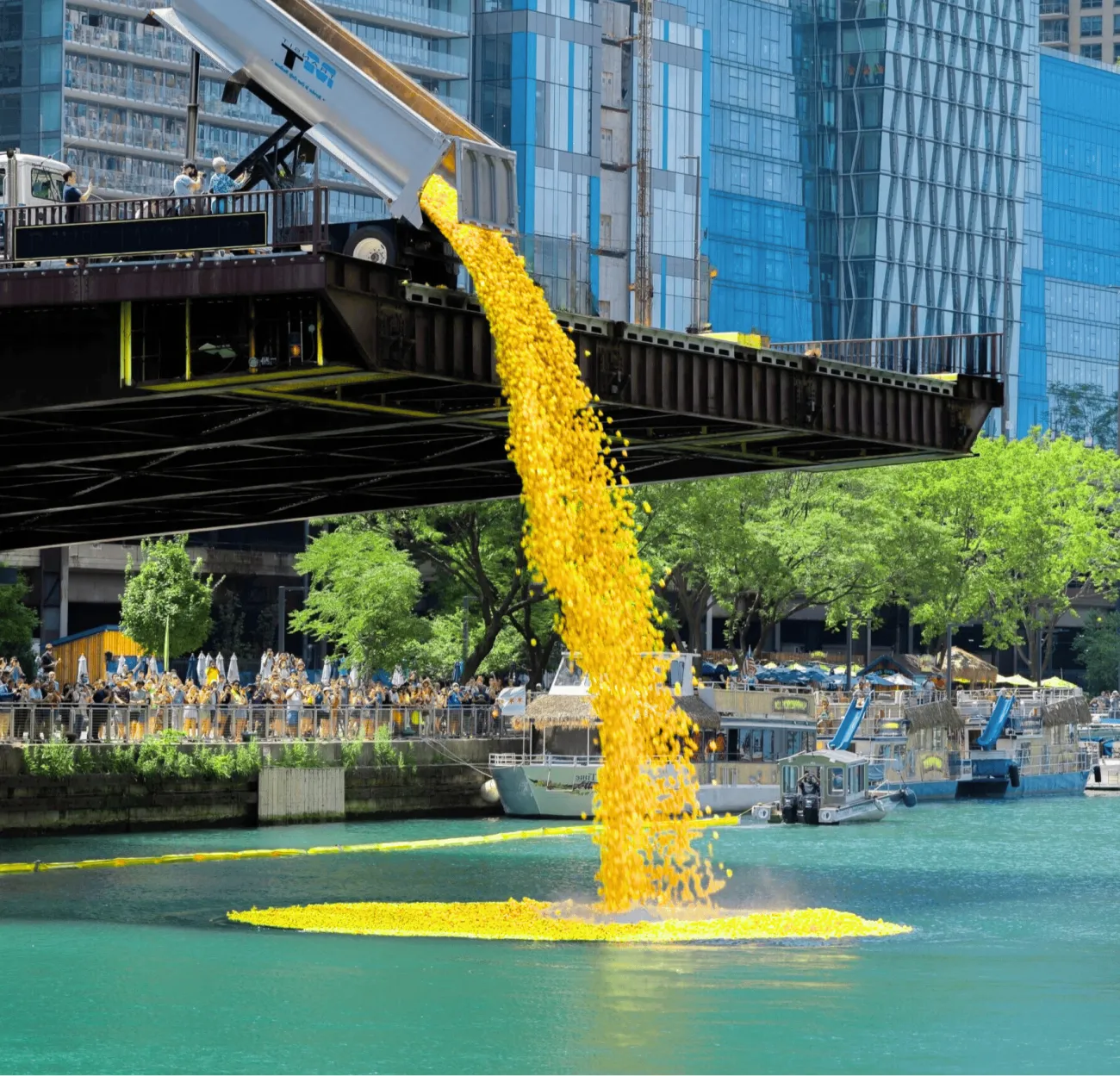
Race time: the drop. Sales close. Emcee counts it down. Ducks go in.
This is the shot everyone came for, and it goes by fast. Have someone whose only job is photography standing in position before the countdown starts, not sprinting into place during it.
The float. Water crew shepherds the flock and keeps the channel clear. The emcee narrates. This stretch runs longer than people expect, so give them something to do with it: sponsor thank-yous, prize previews, a live update on the total raised.
Finish: winners. First ducks across get pulled and their numbers verified against the platform before anyone announces anything. Verify first, announce second. Every time.
Race plus 30 minutes: prizes and photos. Winners announced, prizes handed out, sponsors in frame. Get the photos while the crowd is still there. You’ll want them for next year’s sponsor deck.
Teardown. Retrieval is a real job, not an afterthought. Every duck comes out, booms come out, and the site is left cleaner than you found it. That’s what determines whether you’re welcome back next year. Here’s how the ducks get in and out of the water, from the pallet to the return pickup.
Decide these before race week
Weather. Set your rain policy and your call time before race week, publish it, and hold to it. A duck race runs fine in rain. The real questions are lightning, current, and spectator safety. Name the person who makes the call and the hour they make it.
Water conditions. Current speed changes timing and crew placement. Check it the week of, and again that morning.
Retrieval capacity. Know how every duck is coming out before a single one goes in.
Number verification. Who reads the number, who confirms it against the platform, who announces it. Write it down.
What you’re not doing alone
We provide the ducks, the finish-line catch system, your custom adoption website, marketing and print materials, and post-event reporting, and we hand you the playbook and coach you through it ahead of time. Nobody from our team is on site. What stays yours is the local crew that makes race day feel like your town’s event. You run the day with your people, and here’s what the host owns versus what we carry. We’ve been handing over that playbook since 1988, across more than 2,000 organizations.
Most partners start planning three to seven months out, with a working window of about three to four months and a dedicated point of contact on our side.
Still earlier in the process? The first-timer’s playbook covers everything upstream of race day, and the sponsorship guide covers the workstream that funds it.
If you don’t have a date yet, four quick questions below will get you a free race plan with a timeline built backward from yours.