How Much Does a Duck Race Fundraiser Cost? Full Breakdown
Real duck race pricing: packages from $8,950 to $32,500, plus permits, insurance, and prizes. Includes the break-even math at $5 per duck.
Almost nobody in this industry publishes prices, which is annoying if you’re the person who has to build the budget. So here’s ours, plus the costs that sit outside any package.
A turnkey duck race fundraiser runs between $8,950 and $32,500 with Derby Duck Races, depending on the size of the race and how much support you need. Continuing hosts get 15% off. Budget separately for permits, event insurance, prizes, and any food or entertainment you add. Because the package price is flat, every duck adopted past break-even is margin.
What does a duck race package cost?
Between $8,950 and $32,500, across five flat-rate tiers. Nobody takes a cut of what you raise.
| Package | Price | Continuing-host price (15% off) | Where hosts at this tier usually are |
|---|---|---|---|
| Nest | $8,950 | $7,608 | First-year races. One school, one parish, one small town |
| Flock | $13,900 | $11,815 | Year two or three, or a first race with a strong sponsor roster already lined up |
| Quack | $19,100 | $16,235 | An established race expanding to a countywide audience |
| Wings | $22,800 | $19,380 | Large regional events with a full sponsor lineup and media partners |
| Crown | $32,500 | $27,625 | Metro-scale signature events built over many years |
Tiers differ in duck volume, print and marketing materials, and how much planning support your race gets. We size the tier to your goal rather than talking you into the biggest number on the sheet, and the right-hand column above is where hosts typically land, not a rule.
What’s inside every package: the ducks, a branded race website where supporters adopt online, mobile-friendly adoption software, print and marketing materials, sponsorship strategy and design, step-by-step race-day planning, and marketing consultation. The parts your volunteers are least equipped to build from scratch are the parts you’re paying for. Race day itself is yours to run with your own volunteers, and here’s what the host does from signing to payout.
What costs are not included in the package?
Everything outside the package falls into a handful of lines, and only one of them usually costs real money.
| Cost outside the package | Typical range | What drives it |
|---|---|---|
| Waterway, park, or special-event permit | Often $0 to several hundred | Set by your city, county, or the venue that owns the water |
| Special-event liability insurance | Commonly a few hundred dollars for a one-day event | Your existing policy may already cover it. Ask your broker before you buy anything |
| Grand prize | $0 to several thousand | Most hosts get the top prize donated by a sponsor or dealership |
| Food, music, inflatables, entertainment | $0 to several thousand | Entirely optional. Adding a festival adds cost and adds crowd |
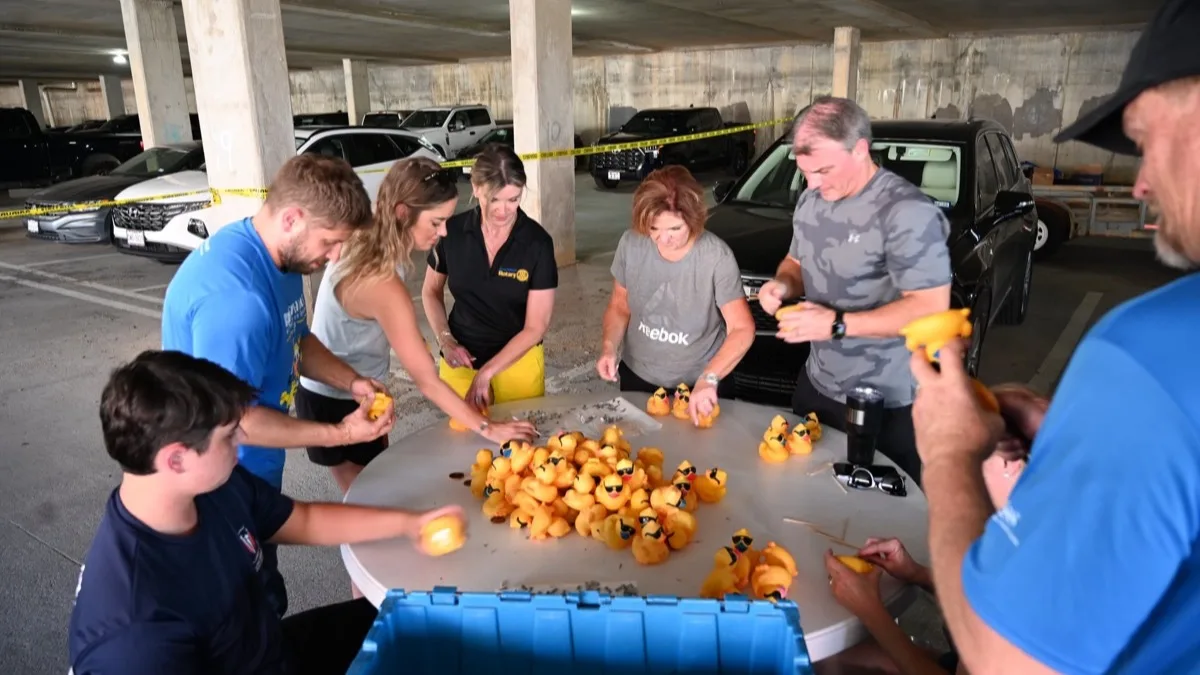
| Volunteer time | Not cash, but real | Sponsor calls in February, a numbering night in March, a crew of 15 to 30 on race day |
Those ranges are typical, not quotes. Permit fees in particular swing hard from one city to the next, so call the parks department or the venue that owns the water early and get a real number before you lock a date.
The prize line deserves a note. A donated car or a $5,000 travel voucher makes a great headline and costs you nothing when a sponsor underwrites it, which is how most well-run races handle it. Paying cash for a prize out of adoption revenue is a choice, and usually a poor one. Here’s how to structure duck race prizes so sponsors carry them.
How many ducks do you need to break even?
Divide the package price by $5. That’s your break-even duck count. Divide again by ten and you get the number of people, because the average adoption on our race platform in 2025 was $50, or roughly ten ducks per supporter.
| Package | Price | Ducks to break even | Supporters at the $50 average |
|---|---|---|---|
| Nest | $8,950 | 1,790 | ~179 |
| Flock | $13,900 | 2,780 | ~278 |
| Quack | $19,100 | 3,820 | ~382 |
| Wings | $22,800 | 4,560 | ~456 |
| Crown | $32,500 | 6,500 | ~650 |
Read the Nest row again, because it’s the one that matters for a first-time host. Covering an $8,950 package takes 179 people adopting at the average. That’s a church directory. That’s a booster club. In year two at the continuing-host rate, $7,608 divided by $5 is about 1,522 ducks, or roughly 152 supporters, so the bar drops again.
Sit with 179 for a minute. Picture the treasurer of a Kiwanis club in a town of 6,000, printing the member roster and her own holiday card list and counting down the columns until she gets there. That takes about ten minutes. It’s also the ten minutes where a board stops debating whether and starts debating when.
Now add sponsors. The orthodontist who already buys the outfield banner, the credit union branch on Main, the dealership that likes seeing its name under a photo of the winner. Most hosts line these up to underwrite the event cost before adoptions open, which means the break-even is covered on day one and every adoption runs clean to the cause. When a host tells their community that 100% of duck adoptions go to the mission, that’s what makes it true. Building those sponsor tiers is the most valuable work your committee will do all spring.
Why does a flat fee beat a percentage split?
Because your margin improves as the race grows, instead of staying frozen forever.
Run the Flock tier at $13,900 through three years of a growing race:
- Year one, 5,000 ducks. $25,000 gross, $13,900 cost, $11,100 left. That’s 44% of gross.
- Year two, 8,000 ducks. $40,000 gross, same $13,900 cost, $26,100 left. Now it’s 65%.
- Year three, 12,000 ducks. $60,000 gross, and at the continuing-host rate of $11,815 you keep $48,185. That’s 80%.
Same event, same vendor, and the share you keep climbs every year without you renegotiating anything.
Compare that with a product fundraiser. Cookie dough, wrapping paper, discount cards, and candy bars generally return somewhere in the range of 40% to 50% to the organization, and that split is written into the program. Sell twice as much in year three and you still keep the same 40%. The other 50-plus cents of every dollar leaves the building forever. We break the comparison down further in duck race vs. product fundraiser.
Percentage models aren’t villainous. They’re just structurally incapable of rewarding you for getting better at your own event.
What does a duck race cost compared with other fundraisers?
Roughly in line with a golf tournament, with a very different cost curve.
Booking a course for a tournament generally runs in the range of $5,000 to $20,000 before a single golfer registers, and that number scales with your field. More players means more carts, more meals, more staff. A gala’s per-plate catering does the same thing, which is why a sold-out gala sometimes nets barely more than a half-full one.
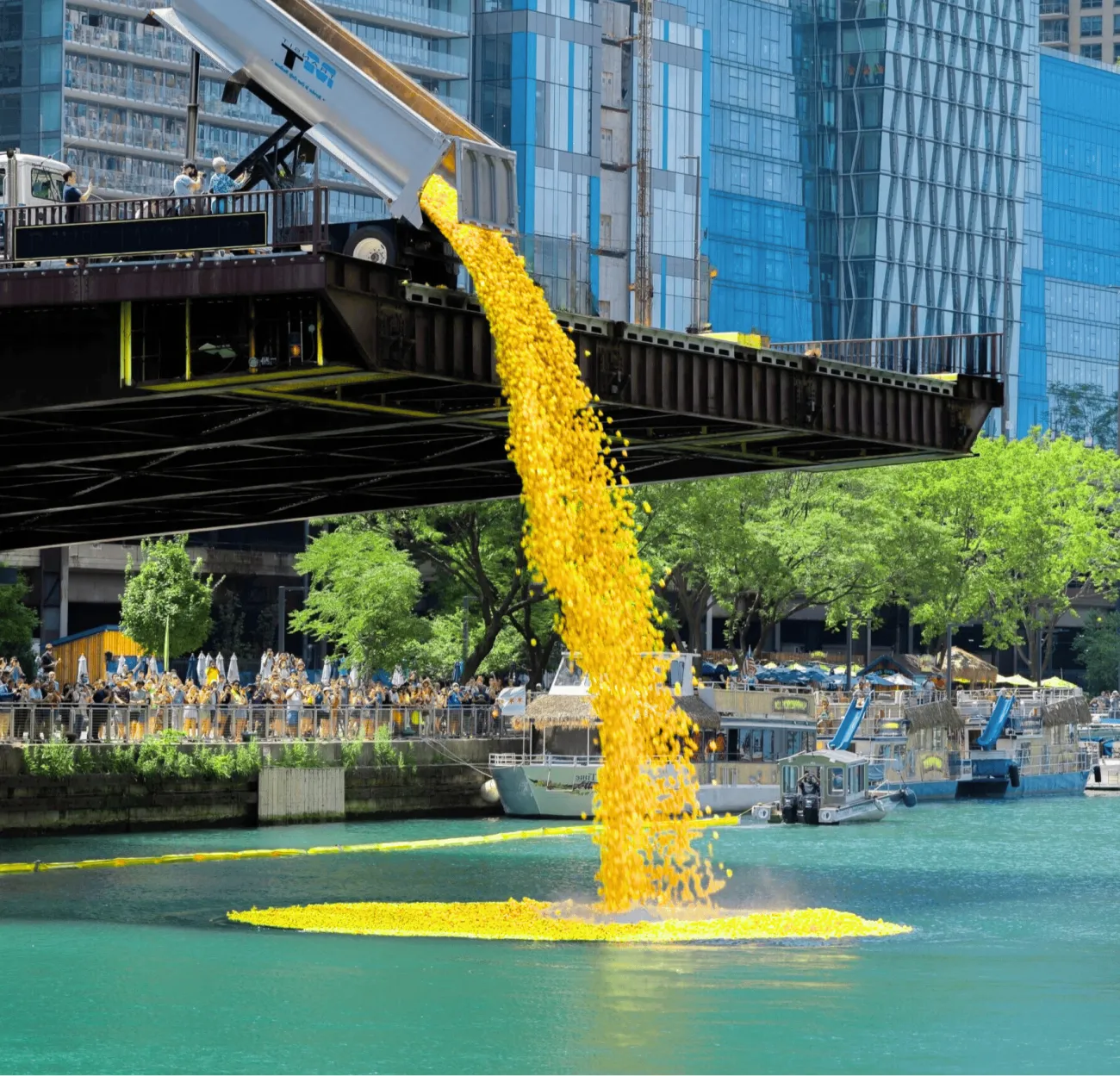
A duck race package doesn’t scale that way. Ten thousand ducks in the water cost the same to run as five thousand in terms of your fixed package, and the incremental cost of one more adoption is effectively zero. So the word to bring to the board isn’t cheaper. It’s flatter.
Watch the second-order costs too. A golf tournament caps at your field size, typically 100 to 144 players. A duck race has no cap, because adoptions happen on a phone from anywhere. We line ten fundraisers up on upfront cost, risk, and revenue ceiling in the comparison guide if you want the wider view.
Who should not spend this money?
An organization with no volunteer base, no local sponsor relationships, and no way to promote the event will struggle no matter which tier they buy. The package is not the missing piece.
A duck race is a community event that converts existing goodwill into dollars. It does not manufacture goodwill from nothing. If you can’t name fifteen people who’ll show up to a tagging party, can’t name three local businesses who’d take a sponsorship call from you, and don’t have a list to email, spend this year building those three things and run the race next spring. Nothing in any package substitutes for them.
Hold off in two other situations as well. If your fundraising goal is under about $5,000, the flat fee is too large a share of what you’d raise. And if your race date is less than four months out, the runway is too short to build a sponsor roster, so you’d be paying full price for a compressed campaign. Four to six months is the window that works.
If your organization has one wealthy, deeply committed donor base and a volunteer who genuinely loves running the annual gala, a gala with underwritten costs can outperform a first-year duck race. Duck races win on breadth. Galas win on depth. Know which one describes your list.
Frequently asked questions
How much does a duck race fundraiser cost?
Derby Duck Races packages run from $8,950 to $32,500 flat, with a 15% discount for continuing hosts. Outside the package, budget for a possible waterway or special-event permit, event insurance, and any prizes or entertainment you add. Most first-year hosts start at the $8,950 tier. That breaks even at 1,790 ducks, or roughly 179 supporters, which is a smaller crowd than it sounds like.
Is there a percentage or commission on what we raise?
No. The price is flat, so every dollar past it stays with your organization. Compare that with a product fundraiser, where a 40% to 50% split is written into the contract and never moves. Sell twice as much cookie dough in year three and you keep the same share you kept in year one. A flat fee does the opposite: your margin climbs as the race grows.
How many ducks do we need to sell to cover the cost?
Divide the package price by $5. At the $8,950 tier that’s 1,790 ducks, and at the $13,900 tier it’s 2,780. Because the average adoption in 2025 was $50, or about ten ducks per supporter, those translate to roughly 179 and 278 people. In most well-run races, sponsors have covered that number before the adoption page goes live.
Can sponsors cover the entire cost of the race?
Frequently, yes. Most hosts line up local businesses to underwrite the package before adoptions launch, which is what lets a host say every duck adoption goes straight to the mission and mean it. What you’re selling them is logo placement on the race website, a banner at the drop point, and an announcer saying their name over a PA while thousands of ducks come down the chute.
What hidden costs should we plan for?
Permits, event insurance, prizes if they aren’t donated, and volunteer hours. Permit fees vary by city and county, so your parks department or your venue is the only place to get a real number. The one that surprises hosts most is time. Sponsorship alone is a two-month campaign of phone calls and coffee, and race morning wants 15 to 30 people on the bank in boots.
Do we save money by buying our own rubber ducks?
Rarely. Ducks are the cheapest component of the whole event, and owning a flock means cash out the door before a dollar comes in, pallets in a board member’s garage from July to March, and cracked ones to replace every spring. You’d still have to source the tagging system, the adoption software, the sponsor materials, and the day-of plan. Our guide to how many ducks you actually need walks through when owning a flock makes sense.
Build the budget from the break-even up
The number your treasurer wants isn’t the package price. It’s the break-even, and at the Nest tier that’s 179 people. Whether you can name 179 people is the whole question, because every adoption past that line is margin and the flat fee never moves again.
So go get the sponsors first. What that math looks like at bigger scales is laid out in how much a duck race can raise, but the shape of it doesn’t change: a committee that covers the package before adoptions open spends the spring selling ducks instead of watching a budget. That’s the difference between a race you’d run again and one you’d rather not talk about.